

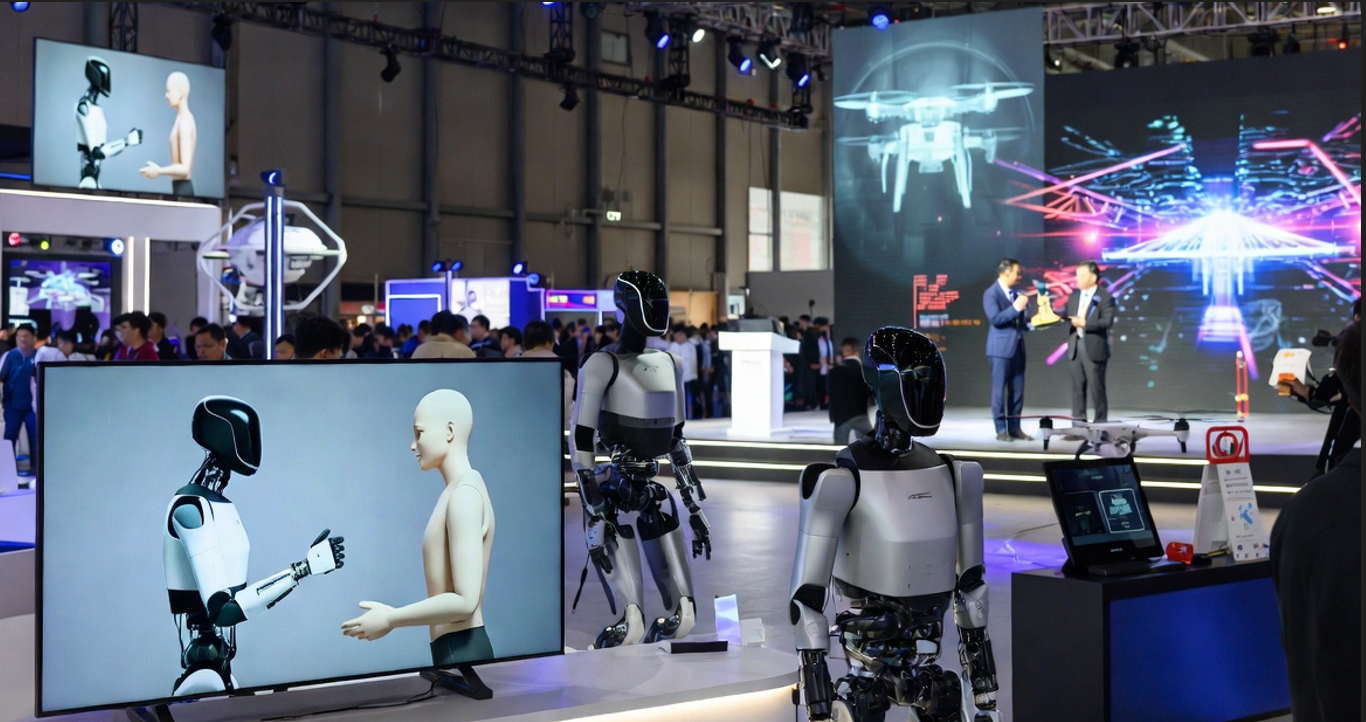
The Consumer Electronics Show (CES) has long been the global stage for tech breakthroughs, where the future unfolds amid flashing lights and buzzing crowds in Las Vegas. But CES 2026 marked a pivotal shift: China didn’t just show up – it commanded the spotlight. Gone are the days when Chinese firms were seen as mere copycats or low-cost manufacturers.
This year, Chinese startups arrived at the CES 2026 in the United States with fully integrated ecosystems, mature technologies including robotics, AI, dark factory and a confidence that resonated through every hall. Nearly a quarter of all exhibitors hailed from China, with over 120 startups lighting up Eureka Park, the innovation hub for emerging tech. More than 100 CES Innovation Awards went to Chinese companies, underscoring not just quantity but a leap in quality and relevance.
This wasn’t about isolated gadgets; it was about cohesive systems blending hardware, software, AI, and scalable deployment. As one observer noted, China is no longer competing company-by-company but ecosystem-against-ecosystem. In a world where speed to market trumps first invention, Chinese firms demonstrated their edge in turning ideas into deployable realities faster than ever.
This exclusive insights for The Gignomist explores the key highlights, innovations, and implications of China’s dominant presence at CES 2026, drawing on fresh reports from reliable sources to paint a comprehensive picture.
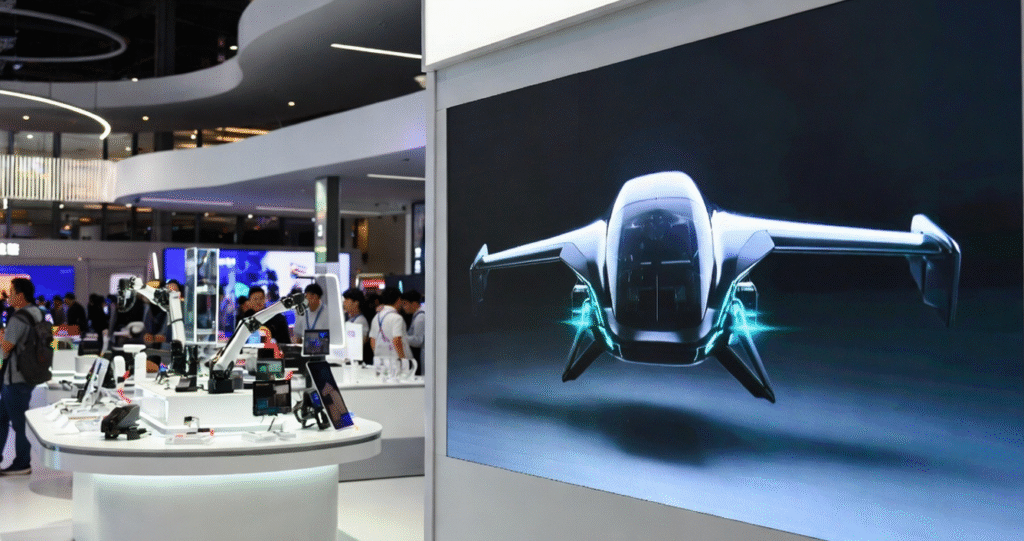
The Massive Scale of Chinese Participation
CES 2026 saw an unprecedented influx of Chinese exhibitors, solidifying the country’s role as a tech powerhouse. Reports indicate that China was the largest foreign participant, with numbers echoing the over 1,300 companies that attended CES 2025 – a figure likely matched or exceeded this year. This scale wasn’t superficial; it reflected deep industrial maturity. Over 100 entries from China in the Innovation Awards program alone highlight how these firms are embedding themselves in global supply chains and consumer markets.
Eureka Park, the startup zone, buzzed with more than 120 Chinese ventures, showcasing everything from AI-driven tools to sustainable energy solutions. This presence extended beyond sheer numbers – it was about strategic positioning. Chinese companies occupied prime booth spaces, drawing crowds with live demos that went beyond prototypes. For instance, Hong Kong’s delegation hit a record size, with firms like AniMed Technology and others winning big in frontier tech categories. This collective force made China impossible to ignore, as attendees navigated halls filled with Mandarin signage, interactive robots, and cutting-edge displays.
The economic backdrop amplifies this: China’s investments in R&D have surged, leading to a patent boom – especially in AI and robotics, where it holds a commanding lead with over 7,700 humanoid-related patents in the last five years, dwarfing the U.S.’s 1,561. This scale translates to faster iteration cycles, tighter hardware-software integration, and designs that prioritize user experience, setting a new benchmark for the industry.
Award-Winning Innovations: Quality Over Quantity
The CES Innovation Awards are the Oscars of tech, and in 2026, Chinese companies stole the show. Over 100 awards went to firms from China, including multiple “Best of Innovation” honors that recognize game-changing products. This isn’t just about participation trophies; these accolades affirm the maturity and global relevance of Chinese tech.
Take Shenzhen-based Yingling Co., which snagged a Best of Innovation for its 8K 360-degree drone – a marvel of aerial imaging that integrates AI for real-time processing and seamless deployment in industries like surveying and entertainment. Netvue Technologies, also from Shenzhen, won for its smart birdbath, a niche yet innovative smart home device that uses AI to identify bird species and provide eco-friendly features. Zettlab earned praise for its AI-powered storage solutions, optimizing data management for enterprises with energy-efficient designs.
In sustainability, EcoFlow’s DELTA Pro Ultra X Whole-Home Power Solution took home an award for its role in energy transition, offering scalable battery ecosystems that integrate with smart grids. Anker Innovations, a familiar name in charging tech, was honored for its Anker Prime Charger, exemplifying clean UI and rapid charging in computer hardware. Display giants like TCL showcased AiMe robots – AI companions for kids – blending education with entertainment through intuitive interfaces.
Beyond individual products, Chinese firms excelled in categories like robotics (up 32% in submissions) and AI (up 29%), reflecting a broader trend toward foundational AI integration rather than add-ons. Leading display manufacturers introduced rollable screens and other cutting-edge tech, pushing boundaries in visual experiences. These wins signal a shift: Chinese innovation is now about solving real-world problems with polished, market-ready solutions.
Breakthroughs in AI and Robotics: From Labs to Life
If one sector defined China’s CES 2026 dominance, it was AI and robotics, where experimentation gave way to industrialization. Humanoid robots stole headlines, with Chinese firms comprising 21 out of 38 exhibitors – over half the total. This surge highlights China’s push toward commercialization, with robots already entering retail and industrial spaces back home.
Unitree Robotics from Hangzhou showcased next-generation humanoids, building on its quadruped lineage with enhanced mobility and AI for complex tasks. AgiBot, founded by a Huawei alum in Shanghai, unveiled a full lineup emphasizing embodied intelligence – robots that adapt across industries, environments, and daily life, far beyond single-function machines. The Beijing Humanoid Robot Innovation Centre (X-Humanoid) displayed Tiangong Walker models, featuring full autonomy and “one-brain, many-machines” coordination for tasks like sorting and heavy lifting. Booster Robotics highlighted its K1 and T1 platforms, designed for multitasking in real-world scenarios.
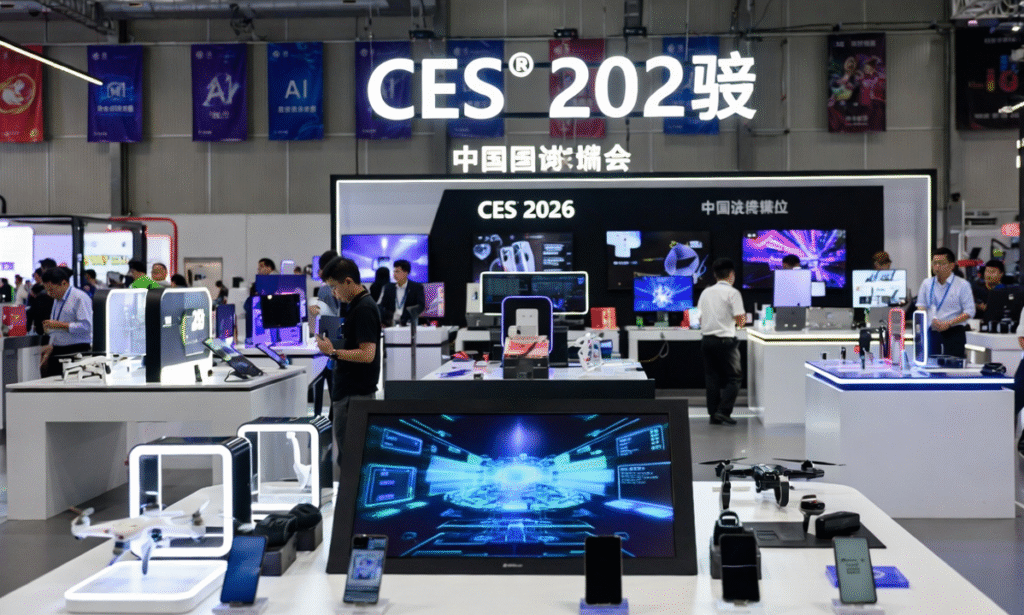
Other standouts included Ascentiz’s modular exoskeleton from Hangzhou, which uses AI to detect walking patterns and provide motorized assistance, fresh off a $2.5 million Kickstarter success. Aiper Intelligent’s AI-powered robotic pool cleaners minimize supervision with self-cleaning tech, while Viaim’s smart earbuds leverage Microsoft AI for data processing and Amazon for secure storage. Timekettle’s translation devices target B2B with rapid prototyping and language expertise.
These innovations aren’t isolated; they’re part of ecosystems. AI has evolved from a feature to the core, enabling better perception, navigation, and reliability in robotics. China’s lead here stems from massive investments, allowing firms to prototype, test, and deploy at speeds unmatched globally.
The Ecosystem Advantage: Integration and Speed
What truly set Chinese companies apart at CES 2026 was their ecosystem approach. Rather than standalone products, they presented end-to-end platforms – hardware synced with software, AI models, manufacturing, and deployment. This maturity shone in areas like smart home automation and energy management, where seamless integration creates value chains that Western competitors struggle to match.
For example, in power solutions, EcoFlow’s award-winning system isn’t just a battery; it’s part of a broader energy ecosystem with smart management apps and grid compatibility. In robotics, firms like AgiBot focus on building interoperable systems for cross-industry use. This holistic strategy accelerates adoption, as seen in faster iteration cycles and user-centric designs with cleaner interfaces and easier onboarding.
China’s industrial confidence stems from its supply chain dominance and government-backed R&D. While the U.S. innovates in labs, China excels at scaling – turning concepts into affordable, reliable products quickly. At CES, this was evident in demos where robots danced, pandas (perhaps symbolic displays) won hearts, and AI seamlessly integrated into daily life.
At the ongoing 2026 Consumer Electronics Show (CES), Chinese companies are unveiling a future where artificial intelligence seamlessly integrates into daily life. (Xinhua)
Global Implications: Redefining the Tech Race
China’s CES 2026 performance has profound implications for the global tech landscape. No longer just catching up, Chinese firms are setting the pace, challenging Western giants in AI infrastructure, robotics, and beyond. With humanoid robots poised for mass production and international expansion, China is positioning itself as the hub for embodied AI.
This shift could reshape industries: faster commercialization means quicker disruption in manufacturing, healthcare, and consumer goods. However, it also raises questions about data privacy, intellectual property, and geopolitical tensions. As Chinese tech goes global – evident in B2B focuses like Timekettle’s government clients – collaborations and competitions will intensify.
For innovators worldwide, the message is clear: adapt to this ecosystem-driven model or risk falling behind. CES 2026 wasn’t a fluke; it’s a harbinger of a multipolar tech world where relevance trumps origin.
Conclusion: Relevance Redefined
CES 2026 will be remembered as the year China transitioned from participant to pacesetter. Through scale, awards, AI breakthroughs, and integrated ecosystems, Chinese companies proved their innovations are not just competitive but essential. As the tech race evolves, ignoring China isn’t an option – it’s a liability. The future is here, and it’s being shaped in Las Vegas by forces from the East.
For more news and reports on emerging technologies, including AI, robotics, cybersecurity, blockchain, gaming and the evolving gig economy, visit the home page of The Gignomist.