
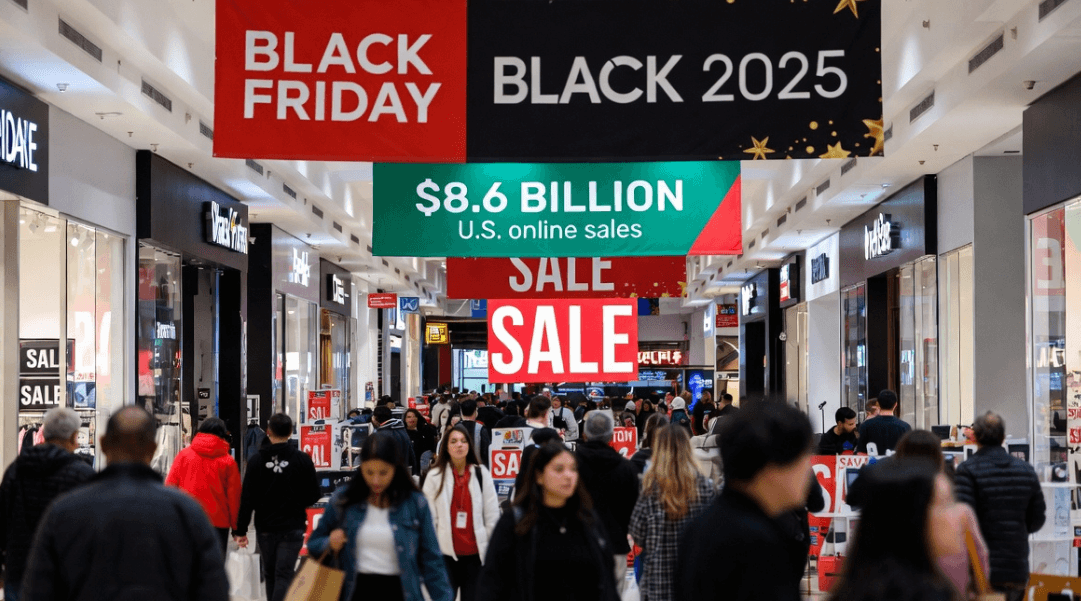
U.S. consumers spent a record $11.8 billion online on Black Friday 2025, according to final figures released by Adobe Analytics — marking a 9.1% jump from last year and cementing Black Friday as the strongest digital shopping day in American retail history.
The surge reflects a dramatic shift in consumer behavior as shoppers continue to favor online convenience, automation tools, AI-powered deal trackers, and major platforms such as Amazon over traditional in-store experiences. Despite concerns over inflation, economic uncertainty, and a softer labor market, American consumers clicked their way through deep discounts with renewed confidence.
A New Era of Digital-First Black Friday
For the second consecutive year, online spending outpaced in-store sales during Black Friday, signaling a fundamental transformation in holiday retail.
Adobe reports that by early evening on Friday, online spending had already surpassed the previous year’s pace by nearly 10%, fueled by aggressive discounts across electronics, personal tech, toys, home appliances, fashion, and beauty categories.
Retail experts say the shift toward online shopping has now become “structural, not seasonal.” Instead of early-morning queues and doorbusters, Americans are increasingly turning to mobile apps and e-commerce websites to avoid crowds and secure deals faster.
Amazon, the single largest driver of online Black Friday traffic, played a major role. Analysts say Amazon’s Lightning Deals, faster delivery guarantees, and expanded price-matching policies helped pull millions of consumers toward its platform throughout Cyber Week. Many smaller and mid-size retailers also relied on Amazon’s marketplace infrastructure, boosting overall ecosystem sales.
AI-Powered Shopping Becomes Mainstream
One factor that set Black Friday 2025 apart was the unprecedented use of AI-powered shopping tools.
Millions of U.S. shoppers used AI-based price trackers, recommendation engines, smart shopping assistants, and automated comparison apps to identify the best deals. These tools monitored real-time price drops, alerted shoppers instantly, and even suggested alternative items with better value.
Retailers themselves leaned heavily on AI as well — using machine learning to personalize deals, predict peak shopping windows, optimize inventory, and reduce cart abandonment. Adobe said AI-driven recommendations contributed significantly to total revenue, especially in electronics and home goods.
AI adoption created a win-win effect:
- Consumers got smarter, highly personalized savings.
- Retailers achieved higher conversions and bigger basket sizes.
Black Friday 2025 may be remembered as the year AI truly reshaped holiday shopping behavior.
Mobile Shopping Hits All-Time High
Mobile devices dominated this Black Friday, with a majority of purchases made directly from smartphones. Thanks to AI-enhanced product search, one-click checkout systems, and faster load times, mobile conversion rates improved sharply.
Adobe estimated that over 55% of all online Black Friday purchases were made on mobile, up from 51% last year.
Younger shoppers (ages 18–35) were the largest mobile spenders, while older shoppers preferred desktop browsing but still completed transactions online.
Amazon reported record traffic on its mobile app, reflecting the platform’s influence in shaping mobile-first holiday shopping trends.
Deals, Discounts, and Consumer Behavior
Steep discounts attracted the majority of online shoppers, particularly in:
- Electronics and gadgets (average 22% discounts)
- Smart home devices (up to 30% discounts)
- Toys and games
- Home appliances
- Apparel and beauty items
Yet despite the surge in spending, analysts note that consumers are becoming more selective. Economic concerns encouraged a “value-over-volume” mindset, where shoppers bought fewer items but chose higher-quality or more essential products.
Some experts also pointed to the impact of inflation and ongoing tariff concerns, which pushed consumers toward discounts earlier in the season and expanded demand for price comparison tools.
Retailers Face Pressure to Compete Online
As e-commerce continues to dominate, retailers face increasing pressure to improve:
- Delivery times
- Return processes
- Website load speeds
- AI-driven personalization
- Customer support automation
Many major retailers also expanded “Buy Now, Pay Later” options, which accounted for billions in transactions this season.
A growing number of shoppers used BNPL on Amazon and other large platforms, helping drive higher average order values.
What This Means for the Holiday Season
With Black Friday setting new records, analysts predict that Cyber Monday could come close to or exceed last year’s high, depending on how retailers sustain discount levels.
Overall, Adobe forecasts strong online spending through December, supported by:
- Early deal outreach
- AI-enhanced targeting
- Consumer preference for mobile checkout
- Retail competition among Amazon, Walmart, Target, and specialty e-commerce brands
The long-term trend is clear: digital holiday shopping has become the norm, not the exception.
For more similar news and reports go to the home page of The Gignomist