As we move past the first quarter of 2026, it’s no longer a question of whether blockchain technology has a role to play in supply chains. The only question is how companies can use blockchain to outmaneuver their competition. Whether it’s the German industry of automation, China’s manufacturing prowess, or the North American digital logistics network, blockchain transparency is revolutionizing the way goods are transported around the world.
What is Blockchain in Supply Chain?
Blockchain in the supply chain is essentially the application of distributed ledger technology to record, verify, and share transaction information among multiple parties in a decentralized and immutable way. This is in contrast to the centralized database model, which is controlled by a single entity. In a blockchain network, information is distributed among the parties, resulting in a shared, immutable record of every transaction that takes place.
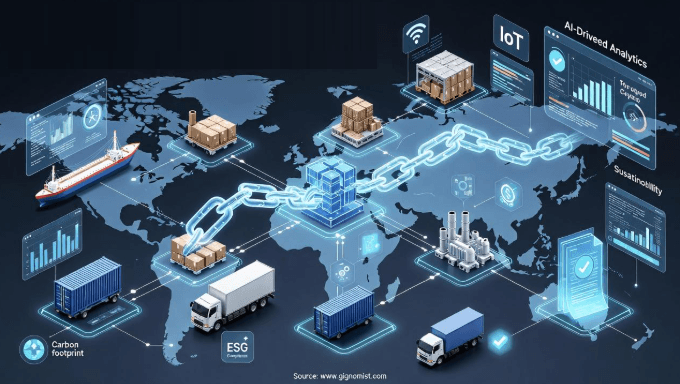
In a Web3 supply chain environment, logistics information, contracts, shipment information, certifications, and payments are all recorded on a decentralized network. This provides real-time visibility and does away with the need for intermediaries.
For example, in a decentralized logistics network, the same authenticated shipment information can be accessed by manufacturers, suppliers, customs, and retailers without the need for multiple reconciliations.
The Core Problems in Traditional Supply Chains
To appreciate the need for supply chain innovations, we need to look at the shortcomings of traditional systems.
The traditional supply chain is highly dependent on disorganized databases, manual documentation, and isolated communication. Every party has its own set of records, which sometimes lead to discrepancies in data and, consequently, delays in operations.
One of the most pressing problems is the lack of transparency. In international trade patterns that include the EU, United States, China, Canada, and Australia, the authenticity of products is sometimes manually verified. This leads to potential risks of counterfeit products, especially in the pharmaceutical and luxury industries.
Another major problem is regulatory requirements. With the European Union imposing tougher regulations on sustainability and ESG reporting, startups are forced to show traceability of raw materials. Without blockchain technology, the traceability of ethical sourcing in different countries is inefficient and costly.
Web3 Supply Chain Solutions: A Structural Transformation
Web3-based supply chain management solutions bring programmable trust to the global logistics infrastructure. Paperwork and centralized management are no longer required, as blockchain technology enables the automation of verification procedures.
Smart contracts are the key to this paradigm shift. These self-executing contracts automatically disburse funds once predetermined conditions, such as delivery confirmation, have been satisfied. For example, a supplier in Germany can immediately receive payment for automotive parts delivered to the United States upon their verified arrival at the port of entry, rather than waiting for manual processing of invoices.
Tokenization is also becoming increasingly important in the context of decentralized logistics. Physical assets can be turned into digital tokens on a blockchain, which facilitates fractional ownership, transparent trade finance, and simplified customs clearance.
The future of supply chain innovation will see enterprises combine IoT sensors with blockchain infrastructure. Temperature-sensitive pharmaceuticals, for example, can automatically record storage conditions on an immutable blockchain. Any anomalies will be immediately apparent to regulatory and other parties.
This integration of blockchain, IoT, and AI is the next level of development of the decentralized logistics infrastructure.
Blockchain Transparency and Trust Building
Transparency is more than efficiency; it is a competitive advantage. Consumers in the EU and US are increasingly demanding evidence of ethical sourcing and carbon responsibility.
Blockchain transparency means that every transaction, from raw material extraction to point of delivery, is recorded on an immutable ledger. This prevents data manipulation and fosters multi-party trust.
In China, where manufacturing capacity is unparalleled worldwide, blockchain-based tracking systems are being incorporated into export compliance systems. In Canada and Australia, blockchain pilots are improving agricultural traceability to confirm food origin and safety standards.
For example, a seafood exporter can offer consumers QR code-based blockchain documentation of catch location, transportation, and storage conditions. Such transparency has a direct positive impact on consumer trust and compliance.
Trust, which was previously mediated by third-party agents, is now hard-coded into infrastructure.
Enterprise Adoption Across Global Markets
The adoption of enterprise blockchain solutions is speeding up in the world’s leading economies.
Germany, with its highly developed Industry 4.0 projects, is incorporating decentralized logistics networks into the supply chains of the automotive and manufacturing sectors. The United States remains active in its investments in blockchain-based trade finance platforms, while Canada is developing blockchain transparency in agriculture and natural resources.
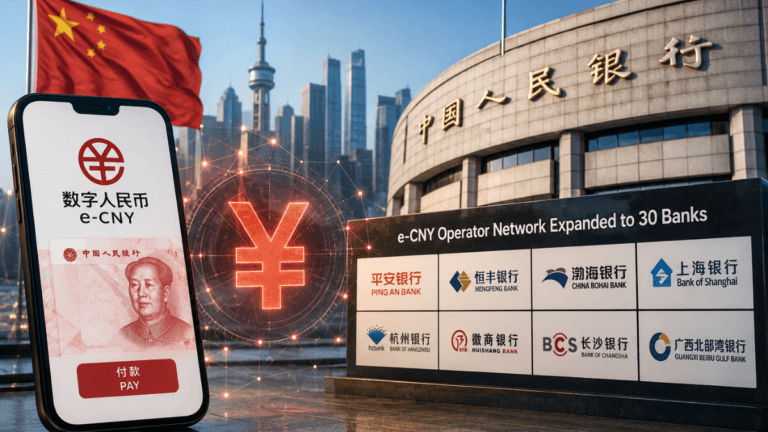
China is actively investing in its national blockchain infrastructure, incorporating distributed ledger technology into supply chain finance and customs digitization projects. Australia, on the other hand, is using blockchain technology for mineral export certification and optimizing cross-border trade.
Supply Chain Innovations 2026: What’s Next?
Looking forward, the intersection of AI, IoT, and blockchain will shape supply chain innovation in 2026.
Artificial intelligence will use blockchain-confirmed data to optimize routes, forecast disruptions, and automate procurement choices. At the same time, IoT-connected containers will automatically upload geolocation and climate information to decentralized networks.
Carbon tracking will become a mandatory regulatory requirement in many parts of the world. Blockchain-based carbon tracking systems will offer tamper-proof confirmation of carbon emissions data, meeting EU sustainability requirements and international climate agreements.
Digital twins, or virtual models of physical supply chains, will connect to blockchain networks to model disruptions and optimize resilience
Industry Use Cases: Real-World Applications
The pharmaceutical sector is one of the top industries that have adopted blockchain transparency. Given the stringent regulatory requirements in the US and EU, it is essential to authenticate the authenticity of medications. Blockchain technology ensures that counterfeit medications do not reach the market by maintaining a record of every transfer of ownership.
The food sector is also a major beneficiary. Agricultural product exporters in Canada and Australia are employing blockchain technology to authenticate organic and sustainably sourced products.
In the automotive manufacturing sector, especially in Germany and China, blockchain technology ensures the traceability of parts from multi-tier suppliers. This improves recallability and compliance reporting.
Challenges and Limitations
Scalability is still a technical issue. There is a need for efficient consensus algorithms in order to handle large transaction volumes in international trade. There is also complexity in making different blockchain networks interoperable.
There may be a lack of uniformity in the regulations of different countries, which could slow down the integration of blockchain across international borders. Care must be taken by businesses to stay within the legal framework to avoid any legal issues.
But with the advancement of technology, these challenges are also likely to be overcome.
The Future of Decentralized Logistics Ecosystems
The future of blockchain in the supply chain is in fully decentralized logistics networks. Autonomous freight networks, combined smart contracts, and blockchain-based trade finance platforms will all work together in a fully integrated manner across borders.
When companies focus on resilience and sustainability, blockchain transparency will become a basic requirement, not a differentiator.
In 2026 and beyond, companies that adopt Web3 supply chain visions will set the pace in global markets.
FAQs
1. How does the Web3 supply chain improve transparency compared to traditional systems?
Web3 supply chain systems use decentralized ledgers to create immutable transaction records accessible to all stakeholders, eliminating data discrepancies and fraud risks.
2. What industries benefit most from blockchain transparency in 2026?
Pharmaceuticals, food supply chains, automotive manufacturing, and global retail sectors are leading adopters due to regulatory and consumer trust requirements.
3. Is blockchain scalable for global decentralized logistics networks?
Emerging consensus models and Layer-2 solutions are improving scalability, making enterprise-wide deployment more feasible by 2026.
4. How does blockchain help with ESG and sustainability reporting?
Blockchain records carbon emissions, sourcing data, and compliance certifications in tamper-proof systems, simplifying audits and regulatory reporting.
5. Which countries are leading Web3 supply chain innovation?
The United States, Germany, China, Canada, Australia, and EU member states are actively investing in blockchain-driven supply chain transformation.