

The 26th International Robot Exhibition (iREX), billed as the world’s largest gathering of robotics innovators, wrapped up Saturday at Tokyo Big Sight with a record 673 companies and organizations on display, drawing more than 150,000 visitors over four days.
Organized by the Japan Robot Association and others, the four-day iREX 2025 highlighted rapid advances in artificial intelligence-driven humanoid robots capable of tackling disaster response, workplace automation and everyday service tasks.
Exhibitors from Japan, China, South Korea, the United States, Germany and other countries and regions showcased prototypes blending delicate precision with brute force, underscoring Japan’s push to maintain its edge in a global market projected to grow amid labor shortages and technological convergence.
Kawasaki Heavy Industries unveiled its latest Kaleido humanoid model, designed for human-scale operations in hazardous environments. The robot demonstrated extinguishing a mock fire, lifting a 30-kilogram fallen shelf and rescuing a dummy from debris — all while wearing standard fireproof gear. “We focus on a human-sized design so that our robots can use fireproof clothing and devices,” a Kawasaki official said.
Nearby, GMO Internet Group‘s humanoid performed agile feats like dancing and jumping while simulating cafe service, drawing crowds eager to see AI integration in consumer settings. Yaskawa Electric, partnering with SoftBank, presented a “near-future office” where an AI-powered robot analyzed photos to tidy cluttered spaces autonomously.
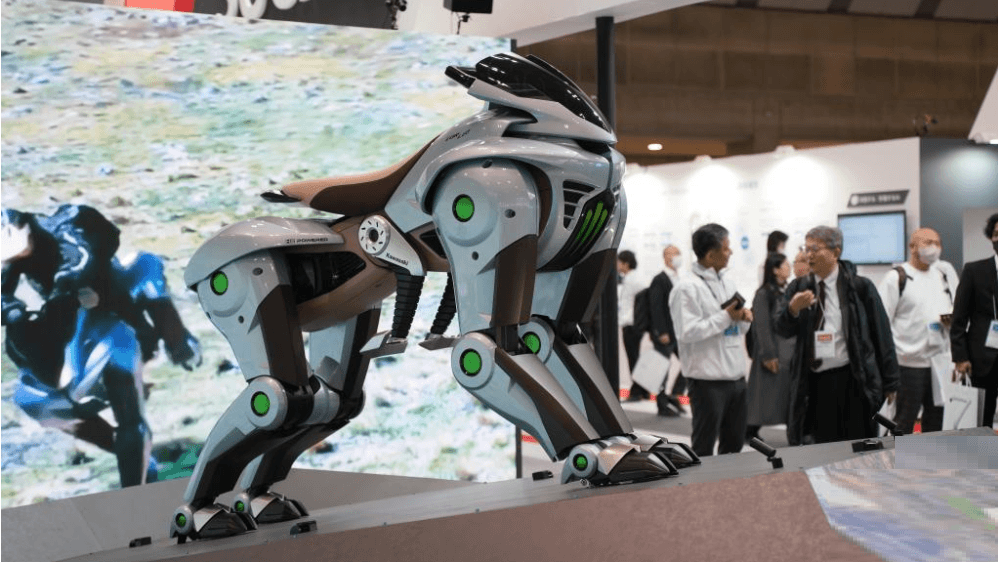
International flair was evident with China’s Unitree Robotics staging a boxing match between its agile humanoids, emphasizing dexterity and speed. Nachi and Yaskawa also debuted new industrial arms for manufacturing, while Kawasaki’s quadrupedal Corleo robot offered off-road personal mobility solutions.
Other innovations included Man-Machine Synergy Effectors’ VR-controlled aerial platform for remote tasks like railway maintenance, and Noitom Robotics’ systems for teleoperated machinery in dangerous sites. The expo’s themes extended to service and companion robots, blending AI for catering, elderly care and entertainment.
Organizers hailed the turnout as a milestone, reflecting surging interest in robotics as demographics shift and automation demands rise. With over 670 exhibitors — surpassing previous records — the event reinforced Tokyo’s role as a hub for the industry’s future, where human-robot collaboration could redefine labor in aging societies.
For more similar news and reports go to the home page of The Gignomist