

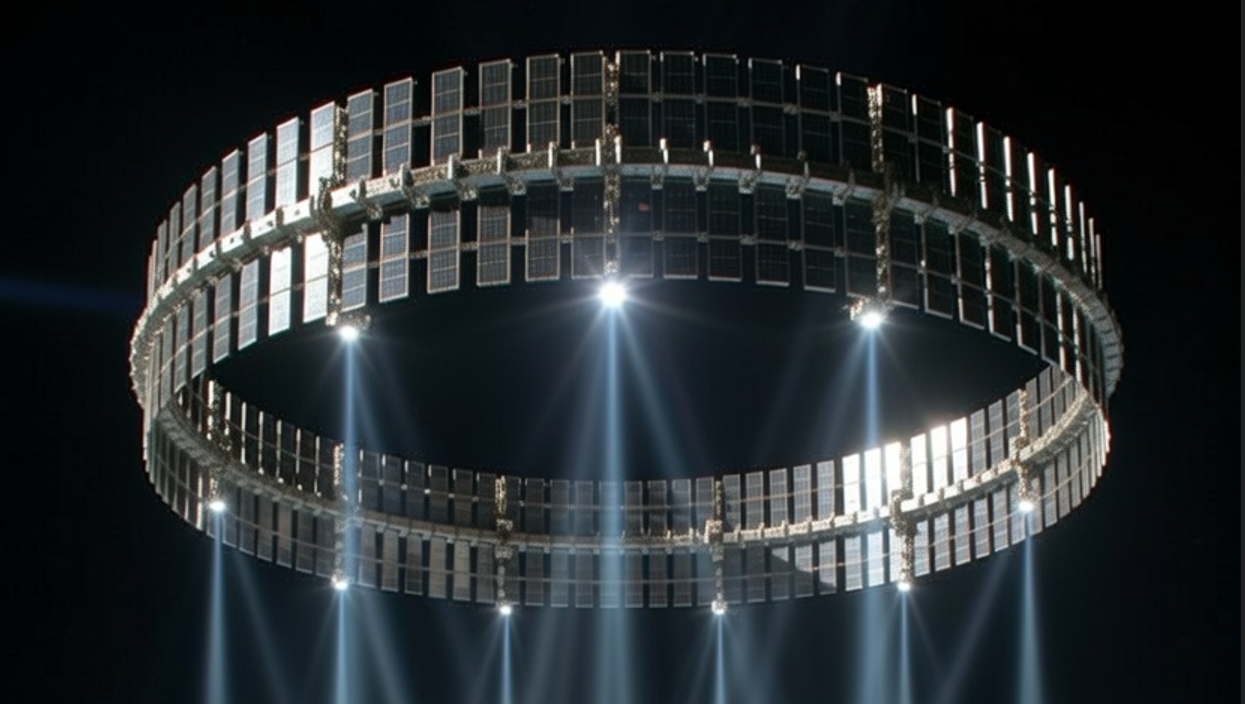
China is moving ahead with an ambitious plan to build a solar power station in space capable of transmitting enough electricity to dramatically reduce global reliance on fossil fuels.
The proposed plant would sit in geostationary orbit about 36,000 kilometers above the equator and collect sunlight 24 hours a day, avoiding weather disruptions and the day-night cycle that limit ground-based solar arrays. Chinese researchers estimate the station could one day harvest up to 100 billion kilowatt-hours of electricity annually — energy proponents say could rival the output of major fossil fuel reserves.
Central to the project is a one-kilometer-wide structure equipped with solar panels that would convert sunlight into microwaves and beam the energy down to receiving stations on Earth. Aerospace engineers argue that the continuous exposure to solar radiation would make the orbital system up to 10 times more efficient than terrestrial solar technology.
China began early construction work in 2019 at its Chongqing Space Solar Power Plant testing site. The government plans to rely on the Long March-9, a reusable heavy-lift rocket capable of carrying roughly 150 metric tons into orbit, to deliver components. Dozens of launches would be required to assemble the power station in space.
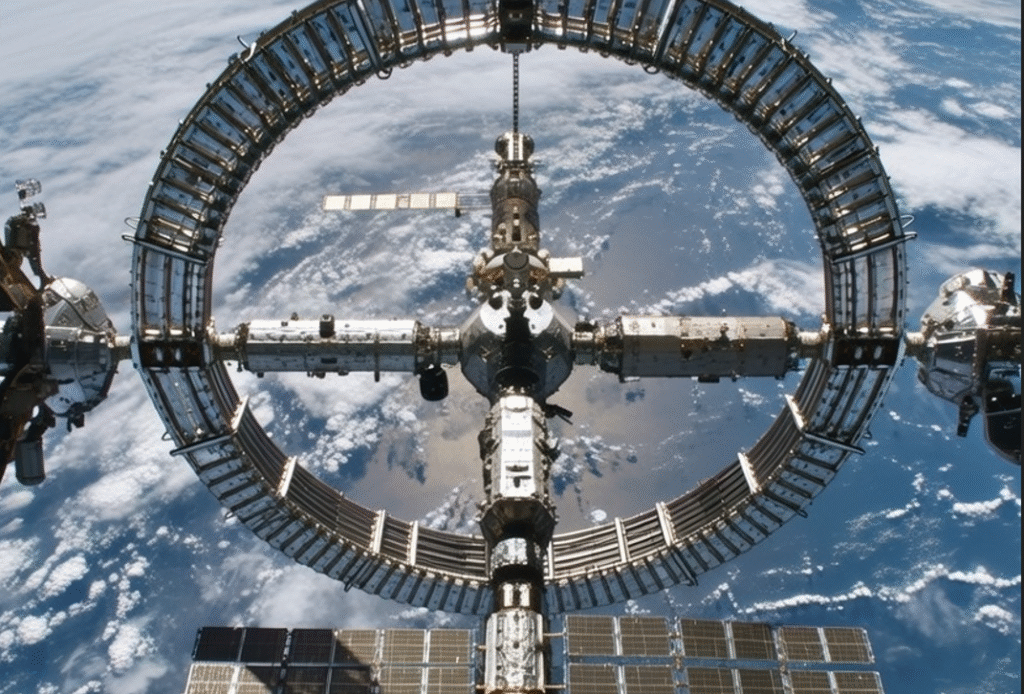
While microwave transmission remains the main technical hurdle, recent experiments — including a 2023 test by U.S.-based Caltech — indicate major improvements in conversion efficiency.
Long Lehao, a prominent Chinese aerospace engineer, compared the project to “another Three Gorges Dam above the Earth,” invoking the world’s largest hydroelectric facility and one of China’s most consequential infrastructure achievements.
The initiative also carries geopolitical weight. China has signaled its intent to lead in renewable energy innovation as global powers race to secure clean power sources. The United States, Japan and members of the European Union are conducting research in similar technologies, but China’s long-term investments and centralized planning place it at the forefront of the effort.
If realized, the system could redefine global energy transmission and accelerate the world’s shift away from oil and coal — placing China at the center of a new era in green power.
For more news and reports on emerging technologies, including AI, robotics, cybersecurity, blockchain, gaming and the evolving gig economy, visit the home page of The Gignomist.