

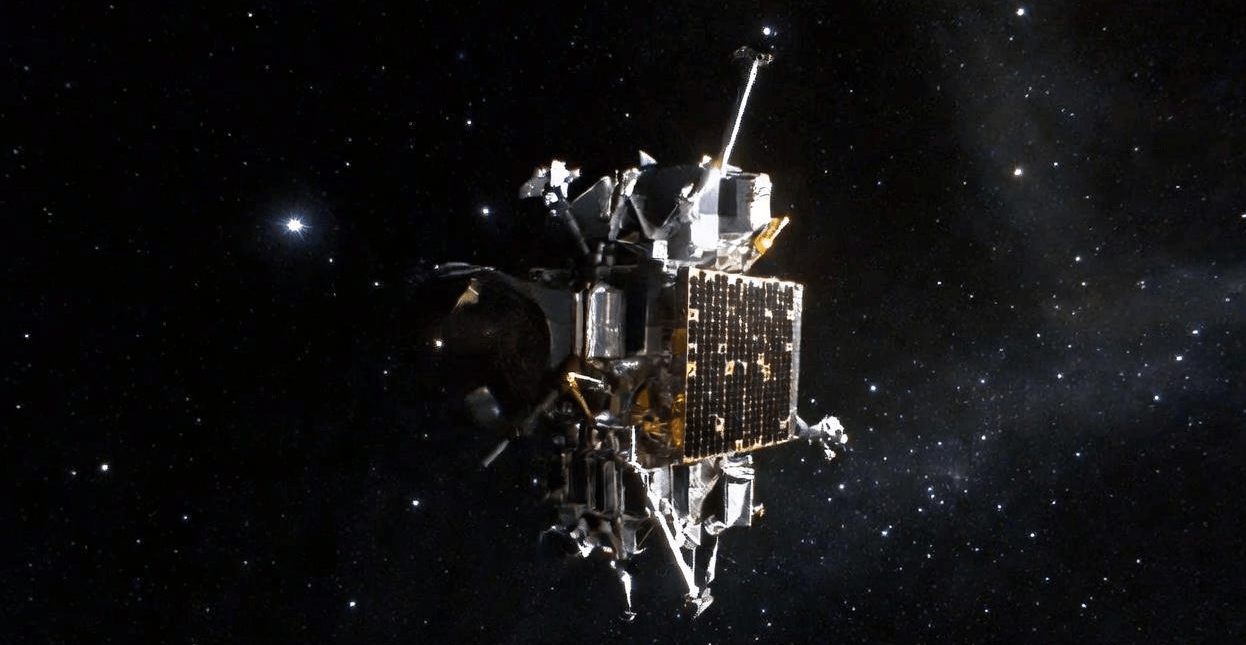
Starlink, the satellite internet company operated by Elon Musk‘s SpaceX, has lost communication with one of its satellites following what the company described as a technological anomaly while the spacecraft was in orbit.
The satellite, identified as Starlink Satellite 35956, was orbiting approximately 418 kilometers above Earth when the incident occurred. Communications with the spacecraft were lost on Wednesday, prompting internal monitoring and coordination with U.S. space agencies. A day later, the company disclosed that the anomaly also resulted in the release of a small number of trackable objects moving at relatively low velocity.
According to Reuters, the objects are being closely monitored in coordination with the U.S. Space Force and the National Aeronautics and Space Administration. The company said the satellite remains largely intact and is expected to reenter Earth’s atmosphere and completely burn up within a matter of weeks. Starlink added that the satellite does not pose a threat to the International Space Station or to astronauts currently in orbit.
The anomaly also caused the satellite’s propulsion tank to vent, leading to a rapid orbital decay. Starlink said the satellite’s semi-major axis decreased by roughly four kilometers, a change that accelerated its descent toward Earth. Engineers are continuing to assess the root cause of the failure while implementing software updates aimed at preventing similar events in the future.
Starlink emphasized that safety remains a priority as it works to expand its global satellite internet service. The company said its engineering teams are actively investigating the incident and deploying protective measures across its fleet to reduce the likelihood of comparable anomalies occurring again.
The incident comes at a time when the number of active satellites in low Earth orbit is growing rapidly. Starlink alone operates several thousand satellites, forming one of the largest constellations ever deployed. These satellites are designed to provide high-speed, low-latency internet access to underserved and remote regions around the world. While the system has been praised for improving connectivity, it has also raised concerns about congestion in Earth’s orbit and the long-term risks associated with space debris.
Low Earth orbit, typically defined as the region up to about 2,000 kilometers above the planet, has become increasingly crowded over the past decade. Governments, private companies, and research institutions are launching satellites at a record pace, driven by demand for communications, Earth observation, navigation, and scientific research. With this growth comes an increased risk of collisions, malfunctions, and debris generation.
Space debris, even in small fragments, can pose serious hazards. Objects traveling at orbital speeds can damage or destroy operational spacecraft if collisions occur. As a result, satellite operators are under growing pressure from regulators and international organizations to demonstrate responsible behavior, including post-mission disposal plans and rapid response to anomalies.
Starlink has previously stated that its satellites are designed to burn up completely upon reentry, minimizing the risk of debris reaching the ground. The company has also highlighted its use of autonomous collision avoidance systems that allow satellites to maneuver away from potential threats. Incidents such as this latest anomaly, however, underscore the technical challenges of managing massive satellite constellations over long periods.
The involvement of the U.S. Space Force and NASA reflects the seriousness with which orbital safety incidents are treated. These agencies maintain extensive tracking systems that monitor objects in orbit and issue warnings when potential collisions are detected. Their cooperation with private operators has become increasingly important as commercial space activity expands.
Industry analysts note that while satellite failures are not uncommon, transparency and rapid mitigation are critical to maintaining trust in large-scale constellations. Companies are expected to quickly share information, coordinate with authorities, and take corrective action to protect the broader orbital environment.
As Starlink continues to roll out new satellites and expand service coverage, the company faces ongoing scrutiny from regulators, astronomers, and space safety advocates. Events like this anomaly are likely to fuel further debate about best practices, oversight, and the sustainability of large satellite networks.
For now, Starlink says the affected satellite is on a controlled path toward reentry, and monitoring efforts will continue until it safely disintegrates in Earth’s atmosphere. The company’s response and the lessons learned from this incident may play a role in shaping future satellite operations as the space industry moves into an increasingly crowded and complex era.