

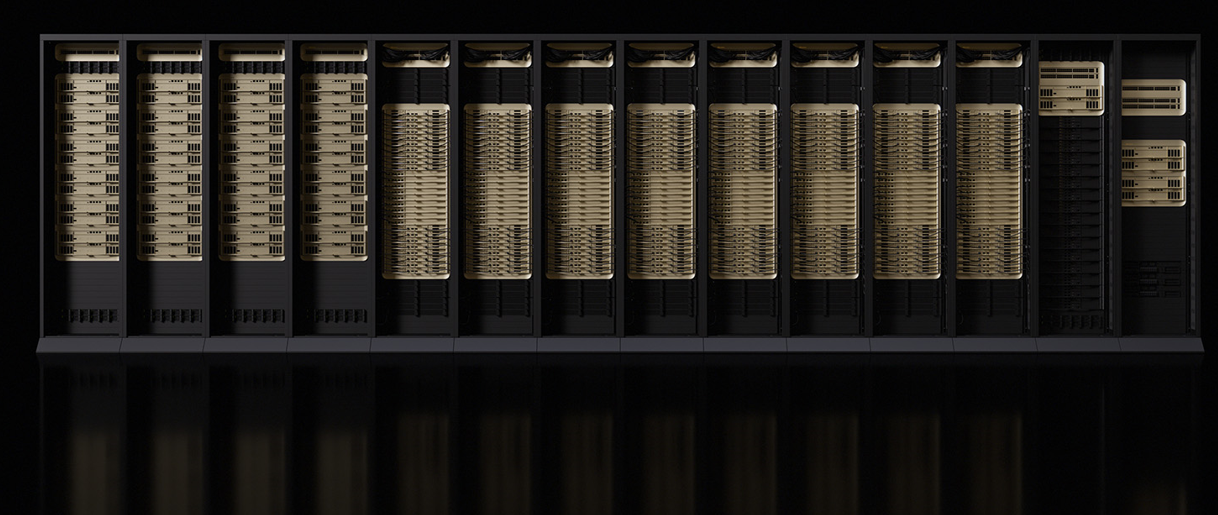
NVIDIA on Monday unveiled its next-generation AI computing platform, Rubin, at the Consumer Electronics Show, introducing a suite of six purpose-built chips designed to power advanced artificial intelligence systems for global data centers.
In a press release, NVIDIA said that the Rubin platform integrates the NVIDIA Vera CPU, Rubin GPU and four networking and storage components — including NVLink 6, ConnectX-9 SuperNIC, BlueField-4 DPU and Spectrum-6 Ethernet Switch — into a rack-scale architecture aimed at slashing the cost and complexity of training and deploying large AI models.
NVIDIA said Rubin delivers up to 10 times lower inference token costs and can train mixture-of-experts models using four times fewer GPUs compared with its previous Blackwell platform, marking a significant reduction in operational expense for AI workloads.
Named in honor of astronomer Vera Florence Cooper Rubin, the platform reflects NVIDIA’s push to accelerate “agentic” AI — systems capable of reasoning, long-context inference and multi-step decision-making — across cloud providers, enterprises and research institutions.
Major industry players including Microsoft, AWS, Google, Meta, OpenAI, Oracle, Dell and CoreWeave are among early adopters expected to deploy Rubin-based servers later this year.
You may also interested in: Nvidia Becomes the World’s First Public Company to Hit $5 Trillion Valuation Amid AI Boom
“Rubin arrives at exactly the right moment, as AI computing demand for both training and inference is going through the roof,” NVIDIA CEO Jensen Huang said. “With extreme codesign across six new chips, Rubin takes a giant leap toward the next frontier of AI.”
Rubin-powered systems are slated to roll out through NVIDIA partners in the second half of 2026, setting the stage for wider adoption of large-scale AI operations across the industry.
For more news and reports on emerging technologies, including AI, robotics, cybersecurity, blockchain, gaming and the evolving gig economy, visit the home page of The Gignomist.