Artificial intelligence is no longer a background component in gaming—it is on the cusp of becoming the creative engine. According to research published by PwC, the global gaming and interactive entertainment market is expected to surpass $321 billion by 2026, with AI-driven personalization and content creation being a major driver of this growth. This is forcing the industry to think about how games are created, scaled, and consumed.
As we look towards 2026, AI-driven gaming, particularly procedural generation, is revolutionizing immersion, replay value, and player agency. While traditional game worlds are static, AI-driven worlds are dynamic, reacting and adapting to the player. This article will examine how procedural generation and artificial intelligence are impacting player experiences around the world.
What Is AI-Driven Gaming?
Before delving into the trends and technology, it is essential to understand what AI-powered gaming is all about. This section will introduce the topic in a way that is easy to understand and optimized for search.
AI-powered gaming is a term that describes video games that incorporate artificial intelligence to make decisions in real-time, create content, and adjust gameplay based on player behavior. Unlike traditional video games that are script-heavy, AI-powered games learn from player behavior and adjust environments, characters, and storylines accordingly.
Evolution of AI in Video Games
The early AI in video games was mostly rule-based. The behavior of non-player characters was predictable and limited. However, over the years, improvements in machine learning and data processing have made it possible to model complex behaviors. Modern AI is capable of processing thousands of player interactions, which has made it possible to create intelligent enemies, adaptive difficulty levels, and dynamic storylines.
Understanding Procedural Generation in Games
Procedural generation is one of the most influential uses of AI in gaming. This section will describe why procedural generation has become a cornerstone of game design.
Procedural generation is the use of algorithms, sometimes aided by AI, to automatically create content for games, such as maps, levels, quests, characters, and even music. Rather than creating all of this content by hand, developers can simply create guidelines and parameters for the AI to follow to generate a huge amount of content.
How Procedural Generation Works
Procedural generation, in essence, is the intersection of randomness and structure. Artificial intelligence algorithms are used to ensure that the content generated is playable, balanced, and interesting while still being unpredictable. Machine learning enables the system to improve the generated content with time by learning what the players like.
Popular Procedural Generation Games
Games such as No Man’s Sky and Minecraft are examples of how procedural generation can be used to improve replay value and size. Each person gets a different experience, but the same gameplay is always present. This is a great way to save on development costs but still have a long content life, which is a benefit that is being sought after by large development studios.
AI-Driven Personalization and Immersive Player Experiences
This section explores the ways in which AI goes beyond content creation and instead influences emotional and experiential complexity.
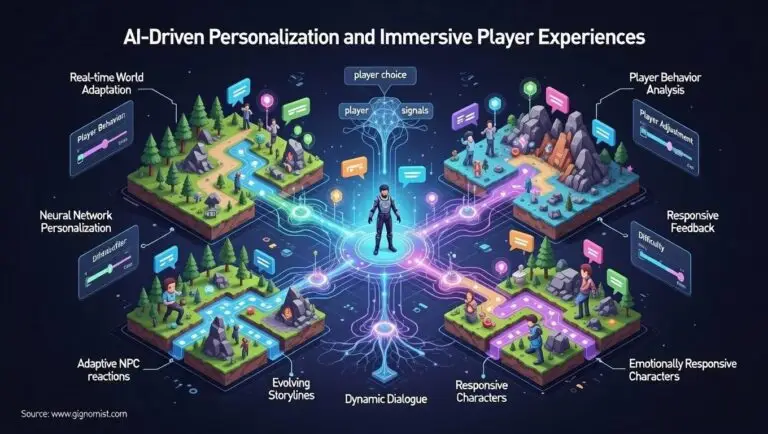
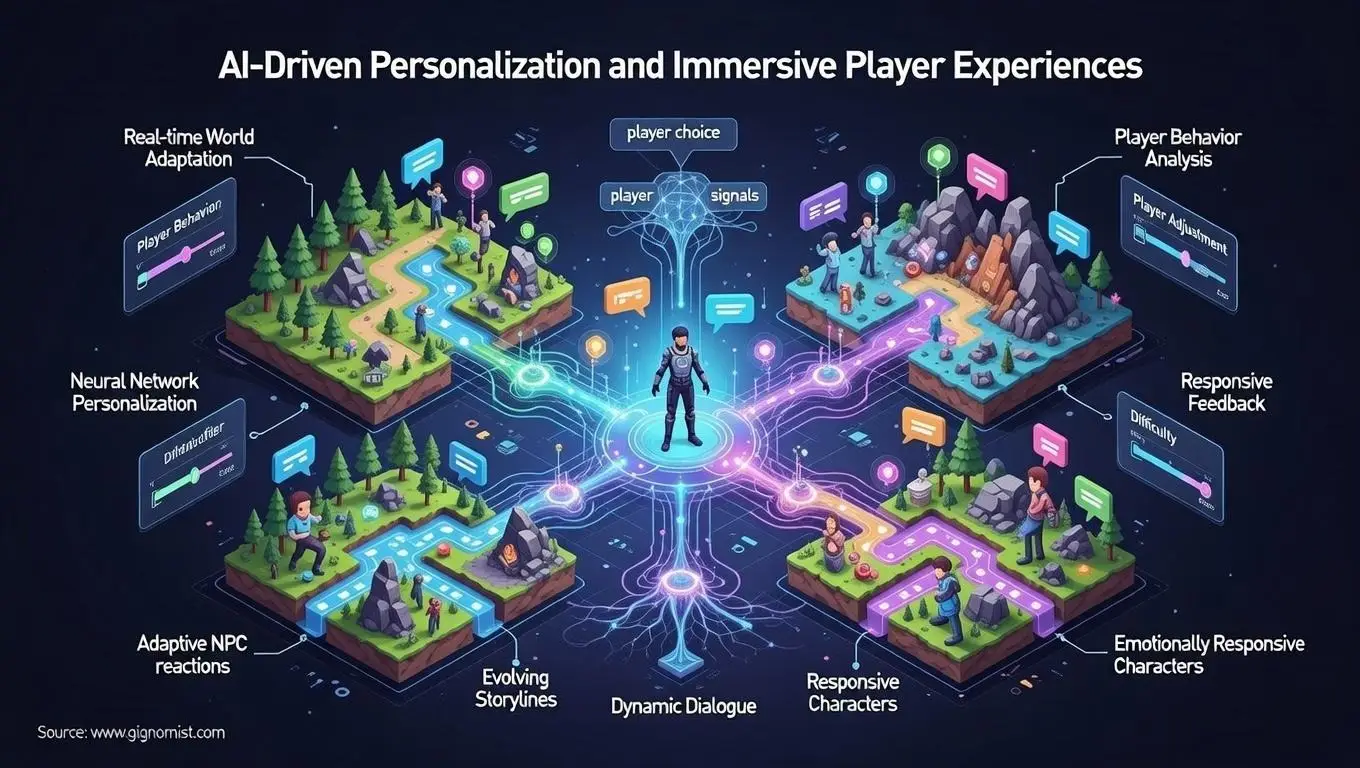
AI-powered gaming allows for a level of personalization that was not possible before. Games can now adapt difficulty, tempo, and narrative style based on how people play.
Player Behavior Analysis
AI systems monitor game decisions, reaction times, and playing behaviors to make predictions about player preferences. This information enables games to provide dynamic levels of challenges that are neither too easy nor frustrating for players.
Emotionally Responsive Gameplay
Advanced AI models enable non-player characters to react emotionally, remember past interactions, and alter dialogue accordingly. These systems create believable worlds where player choices have visible consequences, strengthening immersion and narrative impact.
AI Gaming Trends Shaping 2026
It is vital for game developers, investors, and publishers to understand future trends. This section discusses the most significant AI gaming trends that are expected by 2026.
Generative AI and Dynamic Storytelling
Generative AI is allowing games to automatically generate quests, dialogue, and story branches. Rather than having a fixed storyline, players get to experience dynamic storytelling based on their choices, which greatly enhances replay value.
AI, Metaverse, and Persistent Worlds
Procedural systems based on AI are the backbone of metaverse-like worlds. Worlds that keep on developing even when players are offline depend entirely on AI for simulating economies, biomes, and social interactions.
Cloud Gaming and AI Scalability
Cloud technology enables AI computations to be performed in the cloud, which allows complex simulations without any hardware constraints. This opens doors for smaller game development companies to release AI-intensive games worldwide.
Enterprise Adoption and Global Market Perspective
AI-powered gaming is not geographically limited to a particular area. This section describes how the global market is embracing and regulating these technologies.
United States and Canada
North America is at the forefront of innovation in AI gaming. Large game development companies are heavily investing in R&D in AI gaming.
European Union and Germany
The EU focuses on ethical AI. Game developers in Germany and the EU are incorporating AI systems that comply with regulatory requirements such as data protection and accountability.
China and Asia-Pacific
The gaming sector in China is rapidly embracing AI-powered procedural technology, which is being promoted by government-supported AI programs. The Asia-Pacific market focuses on scalability and mobile-first AI experiences.
Regulatory, Ethical, and Creative Challenges
While AI-driven gaming offers immense potential, it also introduces challenges that cannot be ignored.
Data Privacy and Player Consent
AI systems rely on player data to function effectively. Ensuring transparency, consent, and secure data handling is becoming a regulatory and reputational necessity.
Creativity vs Automation
There is an ongoing debate about whether AI diminishes human creativity. In practice, successful studios treat AI as a co-creator—enhancing human design rather than replacing it.
Why AI-Driven Procedural Gaming Is a Long-Term Opportunity
From an SEO and business standpoint, AI-powered gaming is an evergreen topic. The search interest is constantly increasing, the adoption rate in enterprises is accelerating, and the technological advancements ensure a constant stream of newsworthiness.
The Road Ahead: Beyond 2026
By 2026 and beyond, AI-driven games are expected to function as living systems. Fully autonomous worlds, AI-designed expansions, and deeply personalized experiences will become standard, redefining what interactive entertainment means globally.
FAQs
1. What are procedural generation games?
Procedural generation games use AI algorithms to create dynamic content such as maps and quests, ensuring unique experiences each time a player engages.
2. How does AI improve player experiences in gaming?
AI analyzes player behavior to personalize difficulty, narratives, and environments, making gameplay more immersive and engaging.
3. Are AI-driven games regulated?
Yes, especially in regions like the EU, where data protection and ethical AI frameworks influence game development practices.
4. What are the biggest AI gaming trends for 2026?
Generative storytelling, AI-driven metaverse worlds, and cloud-based AI scalability are expected to dominate.