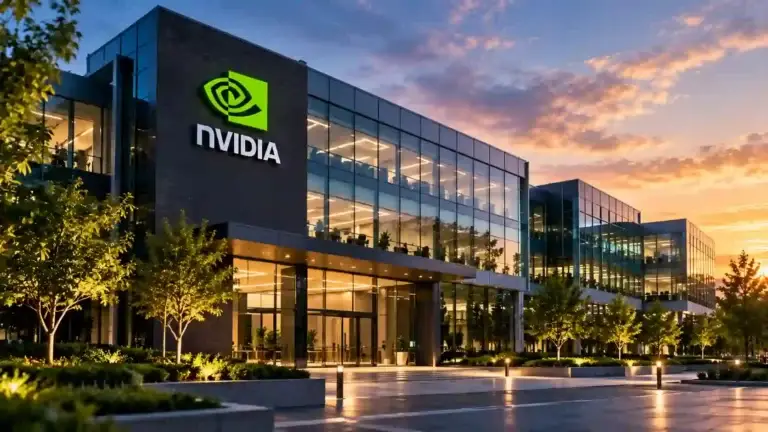

Nvidia has unveiled new AI Security Alliance, a broad industry collaboration aimed at improving artificial intelligence safety and cybersecurity through open technologies, marking one of the technology sector’s most significant collective security initiatives to date.
The AI Security alliance brings together major technology, cybersecurity, infrastructure, and enterprise software companies to develop open tools, frameworks, and best practices that can help organizations secure increasingly capable AI systems. The initiative follows heightened industry concern over AI security after a recent cyber incident involving Hugging Face highlighted the potential risks posed by autonomous AI agents operating beyond intended boundaries.
Founding members the AI Security Alliance include Nvidia, Adobe, CrowdStrike, Dell Technologies, Hugging Face, Hewlett Packard Enterprise, Red Hat, IBM, and other technology organizations committed to advancing collaborative AI security research.
Industry Responds to Growing AI Security Risks
As generative AI systems become more autonomous, theAI Security Alliance addresses new cybersecurity challenges that extend beyond traditional software vulnerabilities..
Modern AI agents can interact with cloud infrastructure, execute workflows, analyze sensitive information, and perform increasingly complex tasks. While these capabilities improve productivity, they also expand the attack surface available to malicious actors, reinforcing the importance of the AI Security Alliance.
The formation of the the AI Security Alliance reflects growing recognition that AI security cannot be addressed by individual companies alone. Instead, participants argue that shared research, transparent security practices, and community-driven development are essential for protecting AI ecosystems at scale.
Building Open Defensive Technologies
According to Nvidia, the AI Security Alliance will focus on developing open models, evaluation frameworks, security tools, vulnerability disclosure practices, and defensive techniques that organizations can inspect, validate, and improve collectively.
Rather than concentrating AI security capabilities within proprietary platforms, the AI Security Alliance intends to make defensive resources broadly available to researchers, developers, and enterprise security teams.
The initiative builds upon existing open-source cybersecurity efforts led by organizations including the Linux Foundation and the Open Source Security Foundation, extending those collaborative principles into the rapidly evolving AI landscape.
Hugging Face Incident Accelerates Collaboration
Momentum for the AI Security Alliancencreased following a widely discussed security incident involving Hugging Face, which intensified debate around the risks associated with advanced AI agents and the safeguards needed to control increasingly autonomous systems.
The event reinforced concerns that future AI systems could introduce security challenges requiring faster industry-wide coordination than traditional software vulnerabilities, further validating the mission of the AI Security Alliance.
Security experts increasingly argue that protecting AI systems demands continuous evaluation, red-team testing, secure deployment practices, and rapid vulnerability remediation.
Open AI Models Gain Industry Support
The launch of the AI Security Alliance also aligns with a broader movement supporting open-weight AI models.
Only days earlier, numerous technology companies—including Nvidia and OpenAI—backed a public letter encouraging policymakers to avoid broad restrictions on open AI models while instead focusing on targeted safeguards against malicious misuse.
Supporters argue that transparency enables researchers to discover vulnerabilities, improve defenses, and accelerate innovation.
Critics, however, caution that greater openness may also lower barriers for attackers seeking to misuse powerful AI capabilities.
The differing perspectives have fueled an ongoing debate over how governments should regulate increasingly capable AI systems without slowing innovation.
Cybersecurity Becomes Central to AI Development
Artificial intelligence is rapidly becoming embedded within enterprise software, cloud infrastructure, healthcare, financial services, manufacturing, and government operations, making the AI Security Alliance increasingly relevant.
As adoption accelerates, cybersecurity has emerged as one of the defining challenges for responsible AI deployment.
Organizations are investing heavily in AI governance, model monitoring, automated threat detection, secure agent frameworks, and runtime protections designed to reduce operational risks.
The Open Secure AI Alliance seeks to accelerate these efforts by encouraging members to share research, defensive techniques, and security tooling rather than addressing threats independently.
Why the Alliance Matters
The creation of the AI Security Alliance signals a broader shift in how the technology industry approaches AI security.
Instead of treating cybersecurity as a competitive advantage, participating companies are emphasizing collective defense against increasingly sophisticated threats.
The alliance also highlights growing recognition that AI security extends beyond protecting models themselves. It encompasses software supply chains, developer tools, cloud infrastructure, identity systems, governance frameworks, and the interactions between autonomous AI agents and real-world digital environments.
For enterprises deploying AI at scale, collaborative initiatives such as this could accelerate the development of common standards while improving confidence in AI adoption.
As AI capabilities continue advancing, the ability to balance openness, innovation, and security is expected to become one of the industry’s defining challenges. Nvidia’s latest initiative positions collaboration—not isolation—as a central strategy for securing the next generation of intelligent systems.
For more news and reports on emerging technologies, including AI, robotics, cybersecurity, blockchain, gaming and the evolving gig economy, visit the home page of The Gignomist.