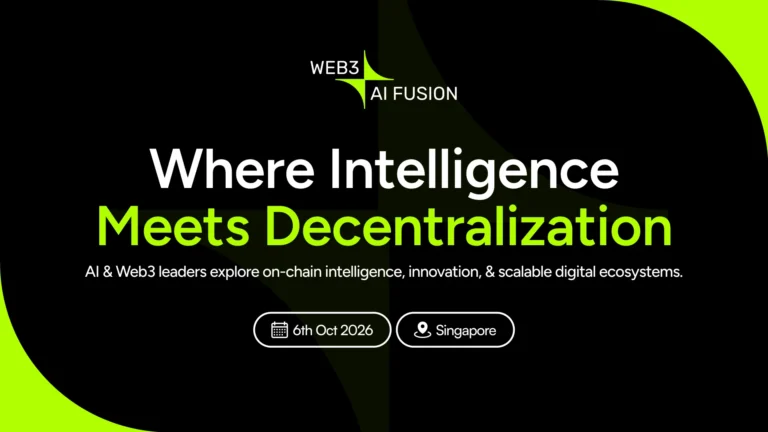


Blockverse Series is preparing an infrastructure-focused gathering in Singapore on Oct. 6, bringing together participants working across decentralized physical infrastructure networks, computing, energy and Web3 as demand for the physical systems behind digital services continues to expand.
The event is expected to focus on Decentralized Physical Infrastructure Networks, commonly known as DePIN, and the practical economics of deploying distributed hardware rather than treating decentralization solely as a software or blockchain problem.
According to event information published by organizers and partners, Blockverse Series is among the groups co-hosting the summit, while CryptoMoonPress is serving as a media partner. The program is aimed at infrastructure operators, founders, engineers, investors and other participants involved in building or financing physical networks.
The timing gives the gathering a broader significance. Artificial intelligence, cloud computing and blockchain applications ultimately depend on physical infrastructure — servers, networking equipment, data centers, cooling systems, electricity and connectivity. The rapid expansion of compute-intensive applications has therefore turned infrastructure capacity, resilience and cost into strategic technology issues.
DePIN Tries to Extend Blockchain Incentives Into Physical Infrastructure
DePIN describes networks that use blockchain-based coordination or economic incentives to encourage independent participants to deploy and operate real-world infrastructure.
Depending on the network, that infrastructure can include computing resources, storage, wireless connectivity, sensors or other hardware.
The model differs from conventional centralized infrastructure, where a company generally owns or contracts the facilities and equipment required to deliver its service. A DePIN project can instead attempt to coordinate infrastructure supplied by multiple independent operators and use tokens or other incentives to reward participation.
That distinction also creates difficult engineering and economic questions.
A distributed network still has to provide predictable performance, security and availability. Hardware has to be purchased, installed, maintained and eventually replaced. Operators must cover electricity, connectivity and cooling costs, while applications relying on the network need ways to verify that promised resources are actually available.
Those operational questions appear set to form an important part of the Singapore discussions.
Hardware Economics Could Be as Important as Protocol Design
The summit’s proposed topics extend beyond blockchain architecture into the economics of running physical equipment.
Sessions are expected to examine capital expenditure for node operators, hardware depreciation, compute-capacity markets and the financial incentives needed to keep infrastructure operating over multi-year periods.
That matters because token incentives alone do not eliminate the underlying economics of hardware.
Servers and specialized processors lose value over time. Electricity and cooling remain recurring expenses. Network operators need sufficient utilization and revenue to justify deploying equipment, while customers need reliable capacity at competitive prices.
The event is also expected to address edge computing, wireless networks, decentralized Internet-of-Things infrastructure and hardware lifecycle management.
Those subjects put the conference at the intersection of Web3 and a much larger infrastructure investment cycle.
As The Gignomist has previously reported in its coverage of growing pressure around data-center expansion, rising computing demand is increasingly colliding with questions about electricity, land, infrastructure costs and local policy.
The same physical constraints do not disappear simply because a network uses decentralized coordination.
Why Singapore Is a Relevant Location
Singapore provides a particularly relevant backdrop for an infrastructure-focused event.
The city-state is simultaneously supporting additional data-center investment and putting greater emphasis on the resilience, security and sustainability of critical digital infrastructure.
In July, Singapore’s Ministry of Digital Development and Information and Infocomm Media Development Authority opened consultation on a proposed Digital Infrastructure Bill covering areas including cloud computing and data-center services. The proposal is intended to strengthen infrastructure security and resilience while addressing the environmental sustainability of data-center operations.
Singapore is also making at least 200 MW of additional data-center capacity available through its second Data Centre Call for Application, with authorities emphasizing resilience, international connectivity and greener energy pathways.
That policy environment makes Singapore more than a convenient meeting point for Asian technology companies. It is also a market confronting many of the same questions that decentralized infrastructure advocates say their technologies could help address: how to increase computing capacity while maintaining resilience, security and sustainable resource use.
Decentralization Still Has to Prove Its Operational Case
The larger question for DePIN is whether distributed infrastructure can move beyond specialized networks and deliver the reliability, economics and service guarantees expected from established infrastructure providers.
Centralized cloud platforms benefit from enormous economies of scale, mature developer ecosystems and tightly controlled infrastructure. Distributed alternatives can potentially diversify ownership and make underused physical resources accessible to wider networks, but they also introduce coordination, verification and performance challenges.
The summit therefore arrives at an important stage for the sector.
Discussions about hardware depreciation, cooling, network latency and operator margins may ultimately be more consequential than broader claims about replacing centralized cloud providers. These are the issues that determine whether decentralized infrastructure can support commercially useful workloads rather than remain primarily an experimental Web3 model.
Blockverse Series describes itself as a platform connecting blockchain developers, founders, investors and communities across ecosystems. More information about its activities and events is available through the Blockverse Series website.
For participants gathering in Singapore, the central challenge will be translating the concept of decentralized physical infrastructure into systems that can compete on cost, reliability and performance.