LG is developing a next-generation bipedal humanoid robot using NVIDIA’s Isaac GR00T platform, marking a major expansion of the South Korean technology group’s push into physical artificial intelligence and intelligent machines.
The company plans to publicly unveil the LG humanoid robot in the first quarter of 2027. It will use NVIDIA Jetson Thor for onboard computing, reasoning and control, while NVIDIA Isaac GR00T will provide the open foundation-model framework for humanoid intelligence. LG also plans to incorporate NVIDIA Halos for Robotics, a safety architecture designed for physical AI systems.
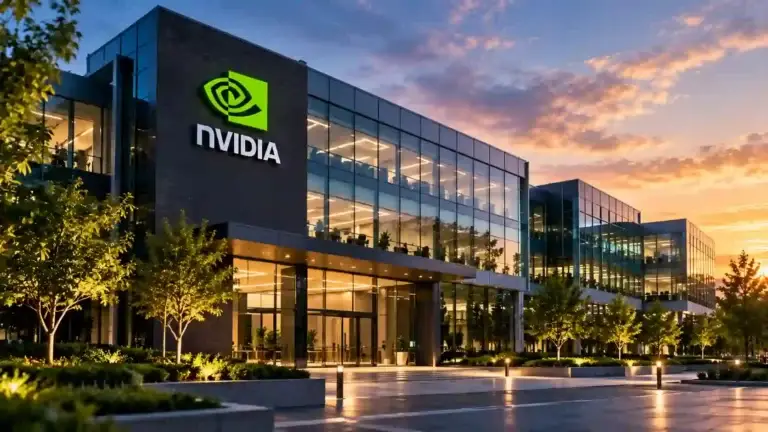
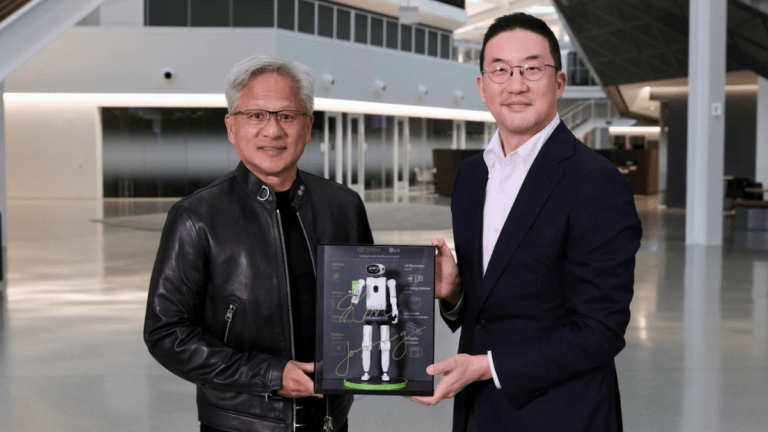
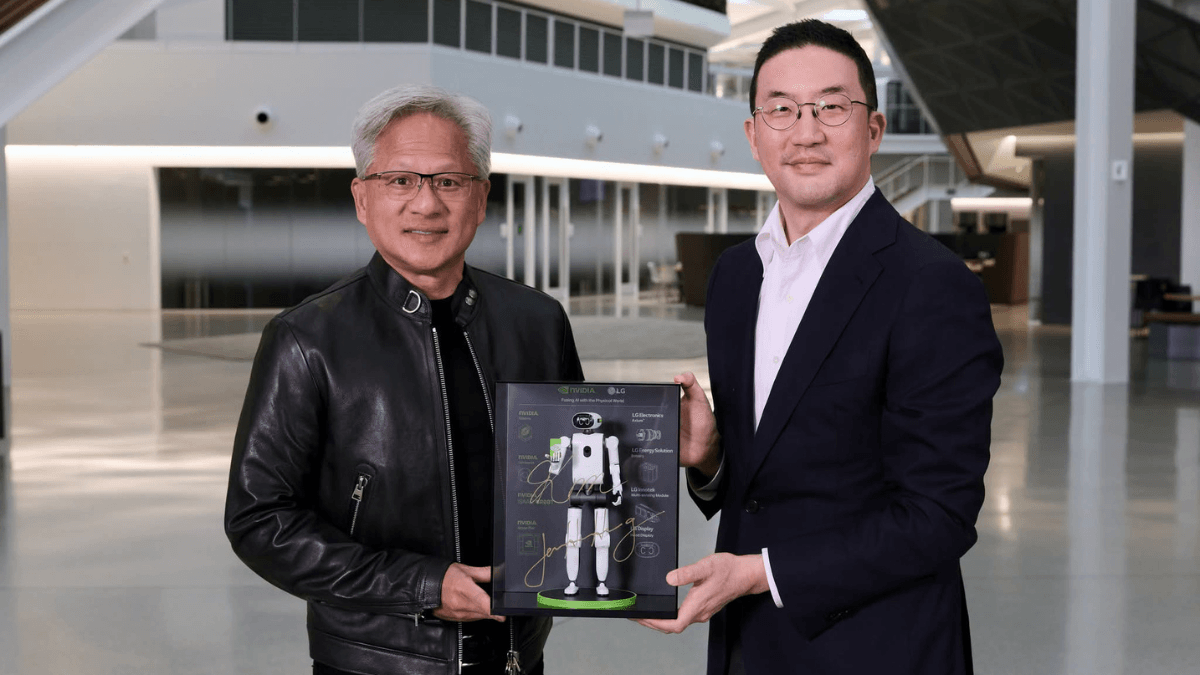
The LG humanoid robot is part of a wider collaboration between LG and NVIDIA covering robotics, AI factories and next-generation vehicles. The companies signed a memorandum of understanding Aug. 13 at NVIDIA’s headquarters in Santa Clara, California, with LG Corp. Chairman and CEO Kwang Mo Koo and NVIDIA founder and CEO Jensen Huang in attendance.
LG Builds Next-Generation Humanoid Robot on NVIDIA Isaac GR00T
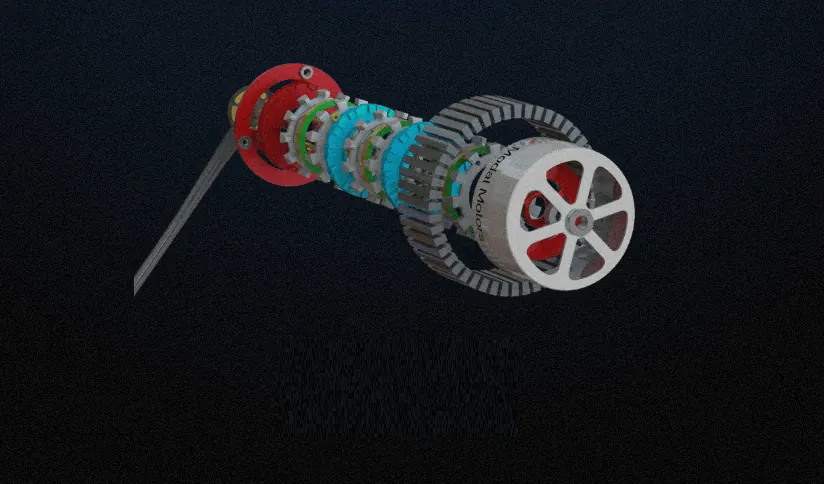
LG said the humanoid project will combine capabilities from several businesses across the group, including actuators, sensors and batteries from LG Electronics, LG Innotek and LG Energy Solution.
That approach highlights one of LG’s potential advantages as it develops the LG humanoid robot and enters the humanoid robotics race: it already operates across consumer electronics, manufacturing, batteries, components and software.
The company is also preparing to deploy its wheel-based LG CLOiD robot at an LG Electronics washing machine manufacturing facility in Tennessee before the end of 2026. The robot will be tested in a real production environment, with results used to refine performance and guide future deployments in factories, homes and commercial spaces.
The factory deployment gives LG a practical environment for collecting data and evaluating robots beyond laboratory demonstrations.
NVIDIA Isaac GR00T Becomes Core to LG’s Robotics Strategy
NVIDIA Isaac GR00T is designed as an open platform for building, training, testing and deploying general-purpose humanoid robots. It combines robot foundation models, simulation environments, data pipelines, middleware and accelerated runtime software with Jetson Thor for real-time inference and control.
NVIDIA says GR00T models can process multimodal inputs such as language and images and perform tasks including grasping, moving objects, transferring items between hands and completing multi-step manipulation workflows.
For LG, the platform provides a foundation for accelerating LG humanoid robot development while the company continues work on its own Robot Foundation Model, or RFM.
LG said data gathered through factory deployments and robotics development will be used to strengthen its internal foundation model while it continues to use Isaac GR00T as part of its broader technology stack.
Robot Data Factory Will Support Continuous Training
The collaboration also includes plans for a robot data factory built around LG CNS PhysicalWorks, LG’s robotics data platform.
The system is expected to support continuous collection of real-world robotics data, synthetic data generation, AI training and model verification.
This data infrastructure could become increasingly important as developers work to improve the LG humanoid robot and other humanoid systems in manipulation, navigation and decision-making.
Unlike conventional software models, physical AI systems must learn how objects behave in real environments. They need training data that captures motion, force, spatial relationships and unexpected physical interactions.
Simulation platforms can generate part of that data, while factory deployments provide real-world feedback that can be used to refine policies and improve reliability.
LG and NVIDIA Broaden Partnership Into AI Factories
The robotics initiative is one part of a larger infrastructure partnership.
LG plans to build an AI factory reference site using NVIDIA’s Vera Rubin platform in the first half of 2027. It then intends to construct an 80-megawatt AI factory in Cheonan, South Korea, by the first half of 2028 to support physical AI and robot foundation models.
LG is also using NVIDIA’s DSX architecture as part of a broader plan to develop end-to-end AI factory capabilities spanning thermal management, power infrastructure, design and operations.
The strategy could eventually allow LG to offer packaged AI infrastructure solutions to outside customers in addition to using the technology internally.
Physical AI Push Extends to Vehicles
LG and NVIDIA are also expanding their collaboration into automotive technology.
LG Humanoid Robotics plans to develop a high-performance computing platform for AI-defined vehicles using NVIDIA DRIVE Hyperion. The system will combine LG’s in-vehicle infotainment and automotive software capabilities with NVIDIA’s autonomous driving technologies.
The broader strategy illustrates how physical AI is becoming a common technology layer across robots, factories and vehicles.
In each case, AI systems must perceive their surroundings, reason about changing conditions and take actions in real time.
Humanoid Robotics Competition Intensifies
NVIDIA has positioned Isaac GR00T as a common development platform for the rapidly expanding humanoid robotics industry. The company says its ecosystem includes developers working on humanoids, autonomous mobile robots and industrial machines.
In May, NVIDIA announced an Isaac GR00T reference humanoid design intended to give robotics researchers a standardized hardware and software platform for developing general-purpose physical intelligence.
LG’s decision to build the LG humanoid robot on the same ecosystem underscores NVIDIA’s growing influence beyond AI data centers and into robotics.
For LG, however, the challenge will be moving from technology demonstrations to reliable machines that can operate safely and economically in real workplaces and homes.
LG Humanoid Robot Signals Broader Physical AI Ambition
The LG humanoid robot represents more than a single product announcement.
LG is building a connected physical AI strategy that combines robots, manufacturing data, AI infrastructure, autonomous vehicles and its own foundation models.
The company’s planned 2027 unveiling will offer the first major indication of how those technologies translate into a full-scale humanoid platform.
If LG can successfully combine its manufacturing expertise, component businesses and NVIDIA’s physical AI stack, it could emerge as a significant new participant in a robotics market that is rapidly moving from research laboratories toward real-world deployment.
Like The Gignomist’s coverage? Subscribe to our free newsletter for the latest technology news, AI breakthroughs, startup updates, cybersecurity insights, blockchain developments, gaming trends, and expert analysis from across the global innovation ecosystem.