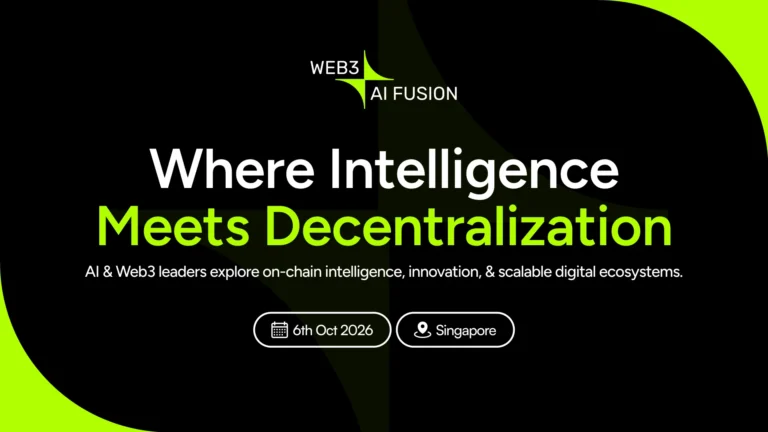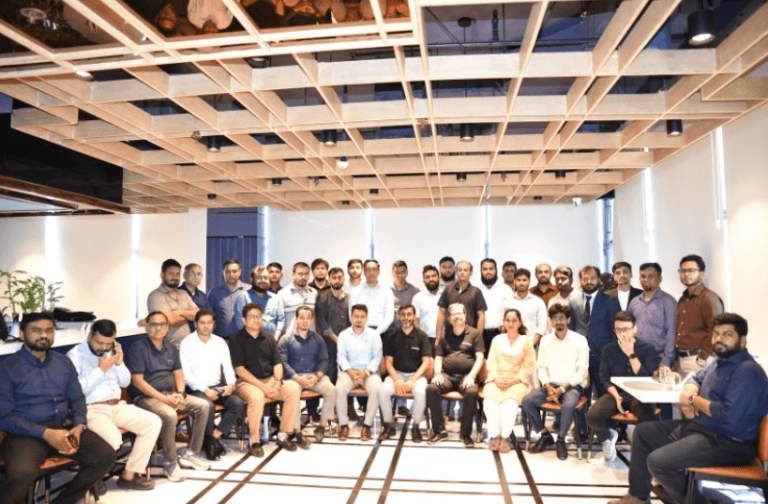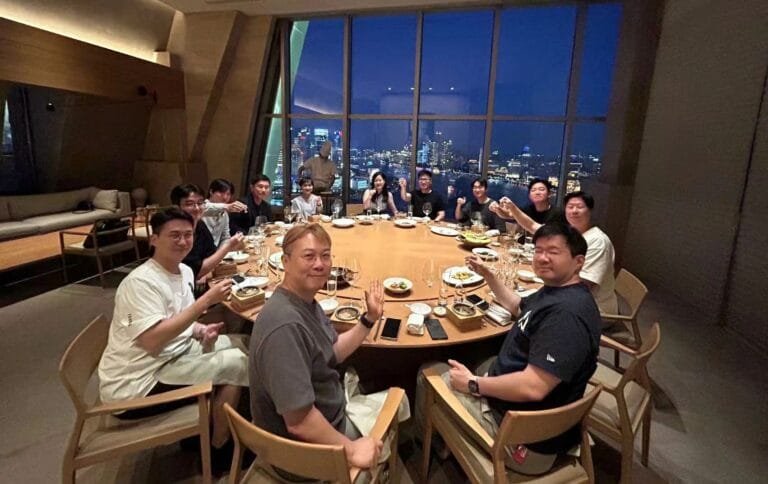
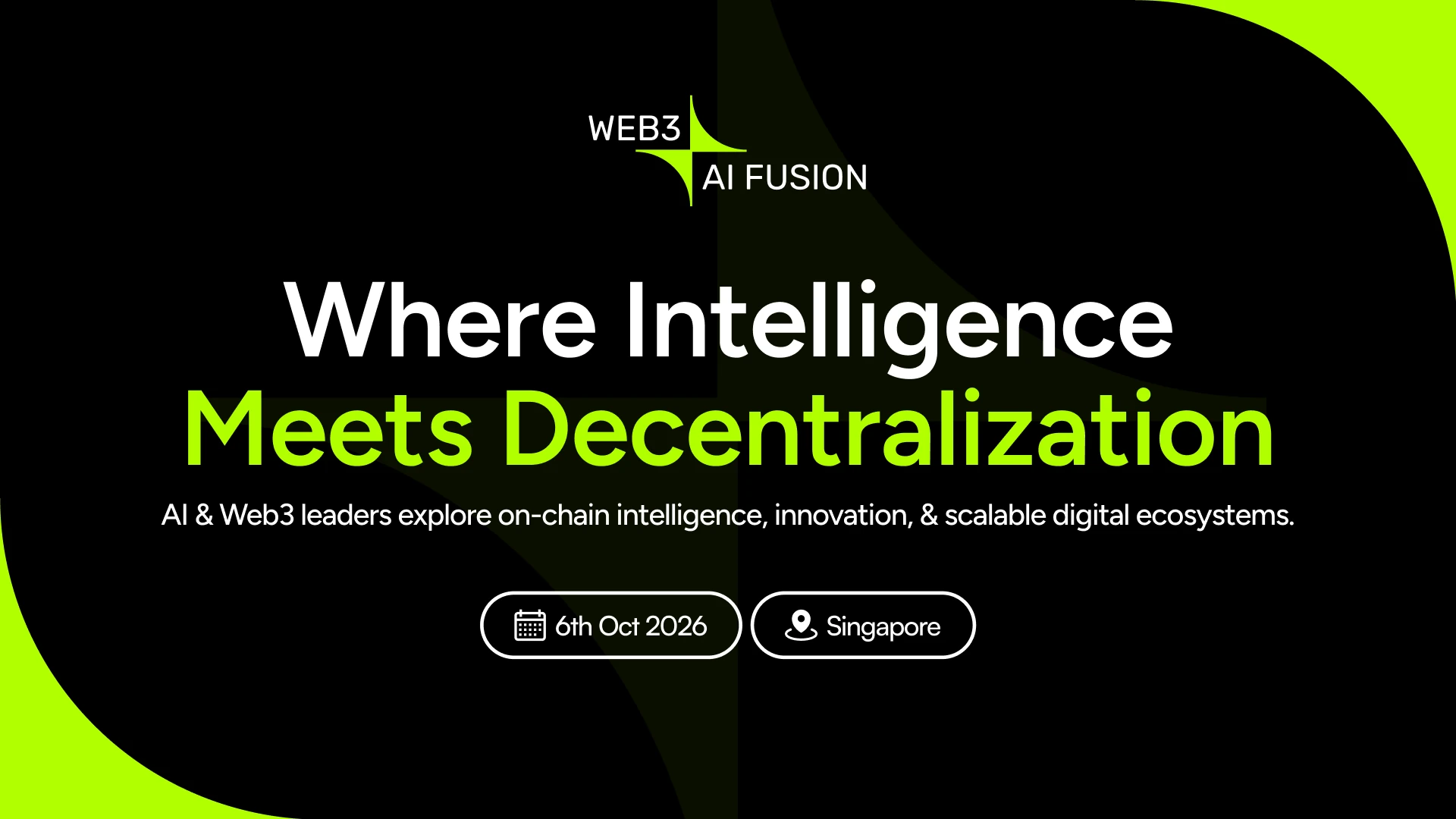
Web3 x AI Fusion is preparing to bring artificial intelligence and blockchain builders together in Singapore on Oct. 6, 2026, with a program focused on AI-powered decentralized applications, smart-contract automation, data ownership, tokenization and the infrastructure needed to connect the two technology ecosystems.
The in-person gathering, powered by Times of Blockchain, is aimed at founders, developers, investors and other technology professionals working at the intersection of AI and Web3. Event information circulated by organizers and media partners lists the program for 9 a.m. to 10:30 a.m. in Singapore.
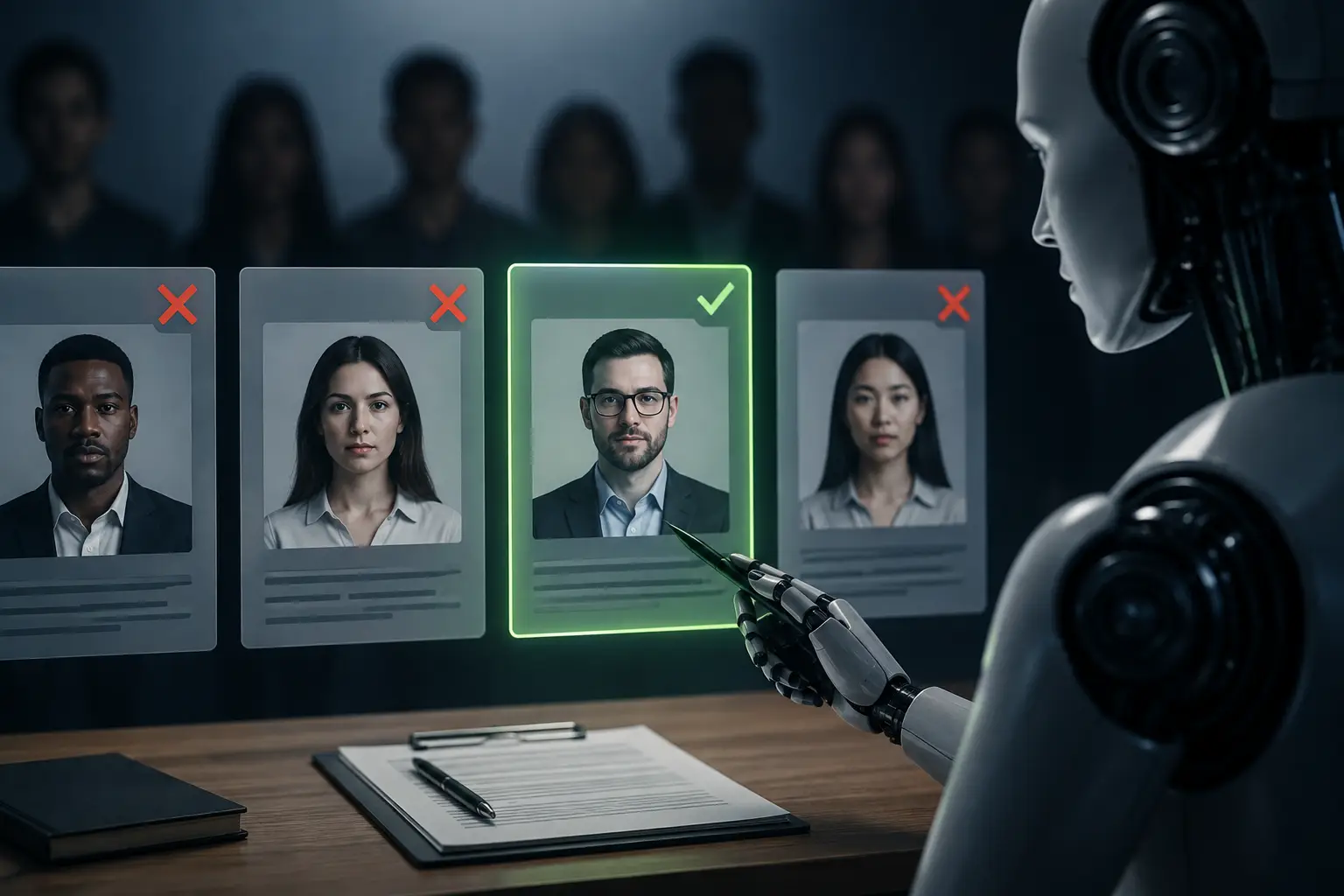
Rather than treating AI and blockchain as parallel technology trends, the event is positioning their convergence as a practical infrastructure question: where decentralized networks can complement AI systems, and where combining them introduces new technical and governance problems.
From AI-Powered dApps to Decentralized Intelligence
The agenda includes AI-powered decentralized applications, smart-contract automation, decentralized intelligence, tokenization, data ownership and infrastructure spanning AI and Web3. The event is expected to use discussions, fireside sessions and networking to connect people building and financing products across the two fields.
The underlying technologies provide different capabilities.
AI models can analyze information, generate content, make predictions and increasingly execute tasks through autonomous or semi-autonomous agents. Blockchain networks can provide programmable transactions, shared records and digital ownership mechanisms without requiring every participant to depend on the same centralized database operator.
Combining those capabilities could allow developers to build applications in which AI performs analysis or automated actions while blockchain-based systems handle assets, permissions, payments or verifiable transactions.
That opportunity is also where some of the hardest questions emerge.
Moving AI workloads directly onto blockchains can be constrained by computation costs, latency and the limitations of distributed networks. Developers therefore have to determine which parts of an AI application genuinely benefit from decentralized execution and which are better handled off-chain.
The Gignomist previously examined these trade-offs in its coverage of Web3 decentralized AI and blockchain-AI integration, including the role decentralized infrastructure could play in compute, data and AI services.
Data Ownership Is a Central Part of the AI-Web3 Debate
Data presents another point of convergence.
Modern AI systems depend on access to large quantities of information, while blockchain-based systems can provide mechanisms for recording ownership, permissions and transactions. In principle, decentralized data infrastructure could give individuals and organizations greater visibility into how certain digital assets or data rights are managed.
That does not automatically solve AI’s data problems. Privacy requirements, data quality, regulatory obligations and the difficulty of removing information from immutable systems can complicate attempts to combine blockchain architectures with AI applications.
Those issues make governance as important as technical execution. A decentralized AI application still needs rules covering access, accountability, security and what happens when an automated system makes a mistake.
Similar usability and governance questions already confront other areas of Web3. The Gignomist’s analysis of Web3’s financial inclusion and usability challenge found that decentralized systems can provide direct ownership and access while simultaneously introducing additional complexity for ordinary users.
Singapore Provides a Relevant Backdrop
Singapore is a particularly relevant location for a discussion about AI infrastructure and decentralized technology.
The government refreshed its National AI Strategy in May 2026, identifying 10 priorities covering areas including industry adoption, research, talent, compute, data and trusted AI environments. Singapore also established a National AI Council chaired by Prime Minister Lawrence Wong earlier in 2026. The government’s updated National AI Strategy outlines its continuing effort to expand AI adoption while developing the infrastructure and governance needed to support it.
Singapore’s interest in blockchain-based financial infrastructure is also well established. The Monetary Authority of Singapore’s Project Guardian has brought financial institutions and international regulators together to explore asset and fund tokenization and decentralized-finance applications. The UK’s Financial Conduct Authority describes its participation in Project Guardian’s work on asset and fund tokenization alongside MAS and regulators from Japan and Switzerland.
The combination makes Singapore a natural meeting point for developers and investors considering how AI systems could interact with tokenized assets, decentralized networks and programmable financial infrastructure.
The Bigger Test Is Moving From Concepts to Working Products
The Web3-AI crossover has attracted broad interest because the technologies appear complementary on paper. AI can add intelligence and automation to decentralized applications, while blockchain systems can potentially provide transaction rails, ownership mechanisms and coordination layers for AI agents.
Commercial usefulness, however, will depend on more than combining the terminology of two fast-growing technology sectors.
Developers still have to demonstrate that decentralized architectures can provide measurable advantages in specific AI applications without creating prohibitive costs, slower performance or unnecessary complexity. Projects involving decentralized compute also have to compete with mature centralized cloud infrastructure on reliability, availability and economics.
Web3 x AI Fusion’s Singapore gathering arrives as those questions are moving closer to implementation. For founders, developers and investors attending the event, the important issue will be less whether AI and Web3 can be combined than where the combination produces a product or infrastructure model that works better than existing alternatives.
The event is scheduled for Oct. 6, 2026, in Singapore. The official Web3 x AI Fusion platform describes its broader mission as connecting infrastructure leaders, innovators and investors around scalable decentralized systems.