
Pakistan’s National Cyber Crime Investigation Agency (NCCIA) has arrested 11 suspects, including alleged call center owner Yasir Gilgiti, during a raid on a suspected international financial fraud operation in Karachi.
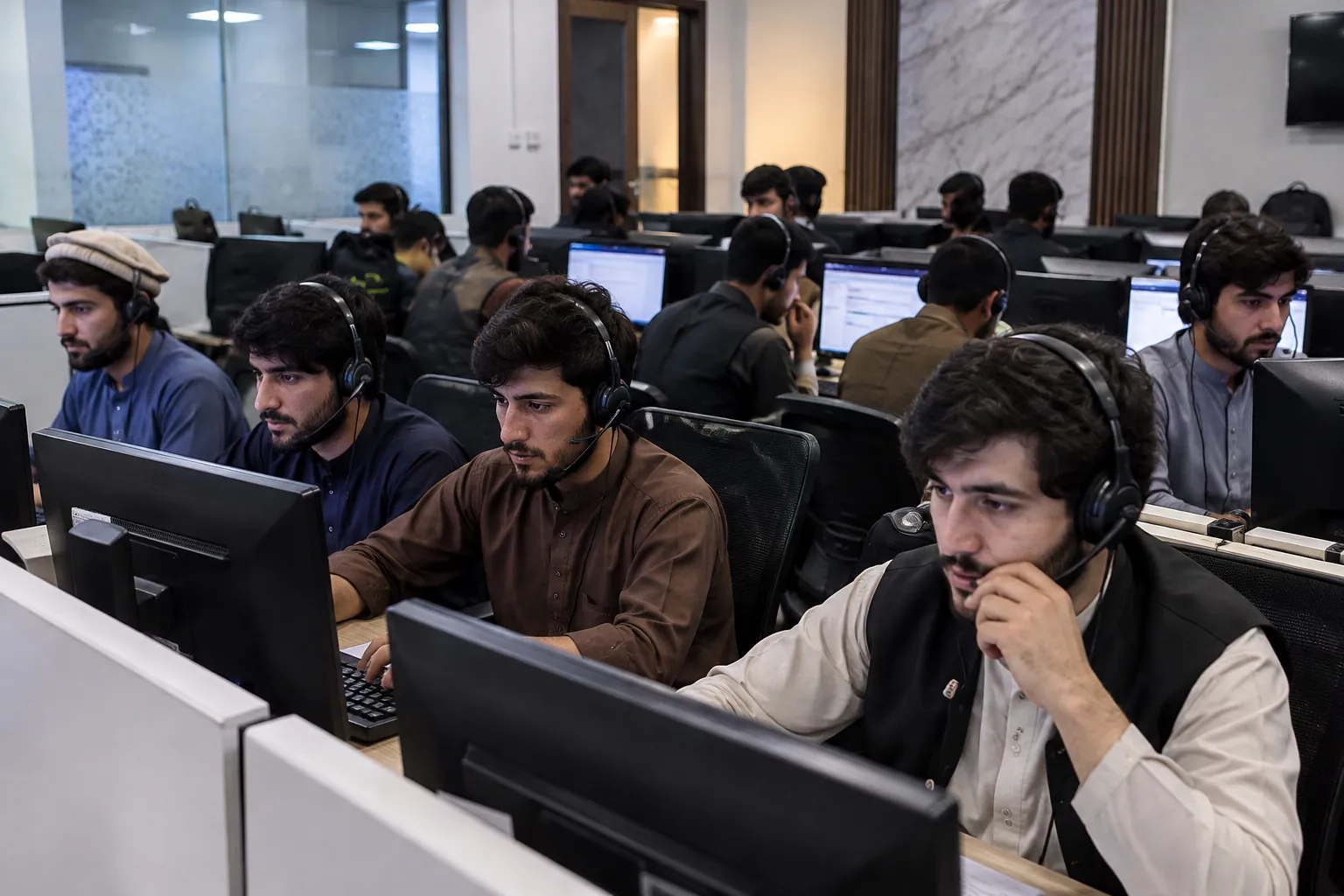
The October 18, 2026, operation targeted a call centre at Zafar Centre on Shahrah-e-Faisal. Investigators allege that employees impersonated American banks and financial institutions to obtain sensitive personal and banking information from US citizens.
The case raises an important question for young Pakistanis, particularly those seeking call centre employment: how can they distinguish legitimate international customer service work from potentially criminal operations?
How the Alleged Karachi Fraud Network Operated
According to media reports; investigators seized digital devices and electronic equipment during the operation.
The NCCIA alleges that suspects used caller ID spoofing, impersonation and prepared scripts to obtain Social Security numbers, credit card information, banking credentials and other personal details.
Investigators suspect the information was subsequently shared within the network to facilitate unauthorized financial transactions.
The agency registered FIR against 13 nominated individuals under Pakistan’s Prevention of Electronic Crimes Act 2025 (PECA) and relevant provisions of the Pakistan Penal Code.
Two nominated suspects reportedly remain at large. The allegations have not been established in court, and those accused are entitled to due process and the presumption of innocence.
Why Gilgit-Baltistan’s Youth Should Pay Attention
The reported arrest of a person identified as Yasir Gilgiti has drawn attention to the risks associated with questionable call centre operations.
However, the suspect’s reported name does not establish that Gilgit-Baltistan has a disproportionately high rate of involvement in cybercrime. No verified regional statistics support that conclusion.
The wider concern is employment awareness.
Young people seeking opportunities in telemarketing, customer support and international sales should understand that working for a business with foreign customers does not automatically make its activities legitimate.
Warning signs include instructions to impersonate banks, conceal company identities, collect customers’ passwords or request sensitive financial information without lawful authorization.
Cybercrime Investigations Can Have Serious Consequences
Pakistan’s cybercrime legislation provides penalties for offenses involving electronic fraud, identity information misuse, unauthorized data access and spoofing.
The potential consequences extend beyond imprisonment or fines. A criminal conviction may affect employment opportunities, professional credibility and international travel, depending on the circumstances.
Financial investigations may also examine transactions, business ownership and individuals suspected of facilitating unlawful activities.
International cooperation can become relevant when alleged victims live overseas, although foreign prosecution, extradition and asset recovery depend on applicable laws, evidence and judicial procedures.
Building Legitimate Digital Careers Instead
Gilgit-Baltistan has opportunities to develop skilled professionals in software development, freelancing, digital marketing and legitimate customer support.
The Gignomist has previously highlighted digital skills development in Baltistan, demonstrating how technology education can support entrepreneurship and employment.
Before accepting a call centre position, applicants should verify the employer’s registration, services, clients and working practices.
Parents, educators and community organizations can support this effort through digital literacy and career guidance.
The Karachi investigation remains ongoing. Its broader lesson is straightforward: sustainable digital careers depend on legitimate skills, ethical business practices and respect for other people’s personal information.