Michigan-based Modal Motors is developing electric motors that can operate without rare-earth magnets, betting that redesigning the motor itself could reduce a supply-chain vulnerability that simply moving manufacturing to the United States does not eliminate.
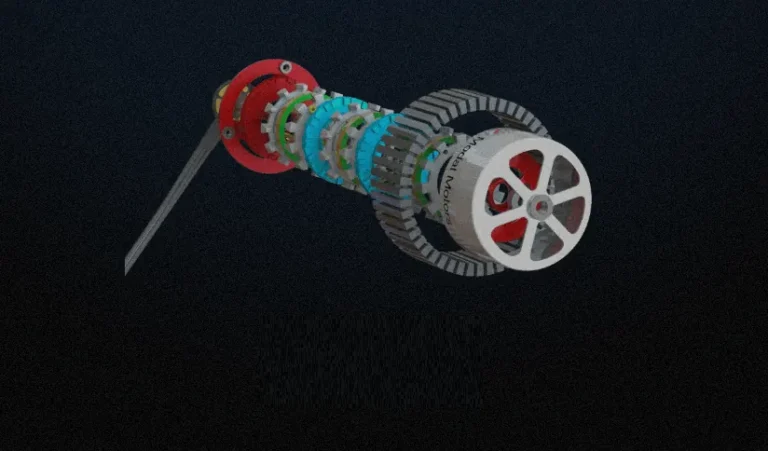
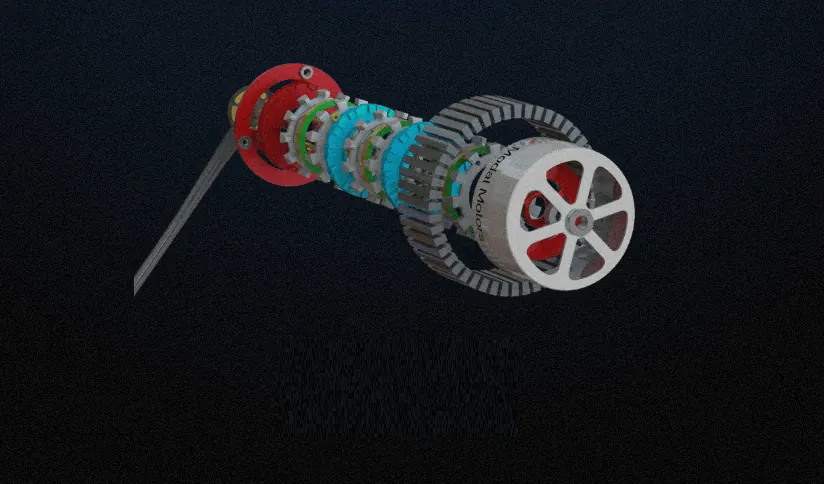
The Farmington Hills company is targeting drones, robotics, pumps, fans, blowers and other systems where motor weight, efficiency and torque density can be critical. Modal says its technology is based on a patent-pending transverse-flux motor architecture and can be configured with either non-rare-earth magnets or U.S.-sourced rare-earth materials.
The distinction matters because electric-motor manufacturing and magnet supply are separate industrial problems. A motor can be assembled in the United States while still depending on permanent magnets whose upstream processing or manufacturing is concentrated overseas.
That is the supply-chain gap Modal Motors is trying to address.
Modal Motors Has Raised About $2.1 Million
Modal Motors was incorporated in Delaware in 2024 and lists its principal place of business in Farmington Hills, Michigan.
An amended Form D filed with the U.S. Securities and Exchange Commission in January 2026 shows the company had sold approximately $2.10 million of a $2.10 million equity offering to 13 investors. The filing identifies Michael Van Steenburg as CEO, executive officer and director.
That financing provides additional context to Modal’s move from motor development toward commercialization. The startup says its team brings decades of automotive and advanced-technology experience, while its technology has been developed around reducing motor mass and improving torque density and efficiency.
Modal is now gaining broader startup exposure as one of the companies selected for TechCrunch’s Startup Battlefield 200.
The Bigger Problem Is the Magnet Supply Chain
Permanent-magnet motors are attractive because they can deliver high efficiency and power density in compact packages. Those properties are particularly valuable in electric vehicles, aircraft and drones, where additional mass can directly affect performance and energy consumption.
But high-performance permanent magnets have historically created another dependency.
The U.S. Department of Energy has described rare-earth magnet supply as highly concentrated in China. Its supply-chain assessment found that China accounted for 58% of global rare-earth mining and 92% of magnet manufacturing in 2020.
That imbalance has turned magnet supply into an industrial-policy issue rather than merely a materials question.
The U.S. government is consequently pursuing several approaches at once. These include expanding domestic extraction and processing, supporting magnet manufacturing and funding technologies that can reduce or eliminate rare-earth requirements.
In June 2026, the Department of Energy announced $134 million for projects aimed at strengthening domestic rare-earth supply chains through recovery and refining from unconventional sources such as mine tailings and electronic waste. ARPA-E separately announced $72 million for early-stage work involving critical minerals and advanced magnet production.
The department is also supporting alternatives to conventional rare-earth motor designs. Its electric-motor research program specifically identifies reducing the use of rare-earth materials as a research priority.
Modal is approaching the same strategic problem from the motor-design side.
How Modal’s Motor Strategy Works
Modal is developing two principal systems.
Its Modular Motor is intended for weight-sensitive applications including unmanned aerial vehicles, pumps, fans and blowers. The company says the architecture minimizes inactive mass while seeking high torque density and efficiency.
Customers are expected to have a choice between a non-rare-earth configuration and another using U.S.-sourced rare-earth materials.
The second design, called the Hybrid Enigma Drive, combines Modal’s transverse-flux architecture with magnetic gearing. The company describes it as a low-profile system capable of accepting mechanical input from sources including an internal-combustion engine, wind or water.
The concept is significant because eliminating rare-earth magnets is not automatically an engineering improvement.
Conventional permanent-magnet motors became widespread precisely because rare-earth magnets can help manufacturers build compact, efficient and powerful machines. Alternative motor technologies therefore have to compete not only on material availability and price, but also on efficiency, weight, thermal behavior, manufacturability and torque density.
Modal says its architecture has been third-party validated against competing rare-earth motor designs, but detailed independent performance data sufficient to compare the technology across commercial applications has not been publicly disclosed.
Commercial-scale manufacturing will therefore be an important test of the company’s claims.
Drones Could Be an Important Early Market
Modal’s focus on drones and robotics gives the company a different commercialization path from startups attempting to enter passenger-vehicle propulsion immediately.
Small aerial systems are extremely sensitive to motor weight and efficiency. At the same time, growing demand for drones in industrial, commercial and defense applications has increased attention on the origin of components throughout the supply chain.
A motor that combines competitive power density with a less China-dependent material chain could therefore address both an engineering requirement and a procurement concern.
But the opportunity also raises the performance threshold. In a drone, improvements in supply-chain security are unlikely to compensate for substantial losses in weight, efficiency or reliability. Modal will need to demonstrate that its material strategy works without imposing unacceptable engineering trade-offs.
Reshoring the Factory Is Not the Same as Reshoring the Supply Chain
That distinction is the larger significance of Modal Motors.
U.S. industrial policy is directing money toward mines, mineral processing, magnet factories and advanced manufacturing. Those investments could expand domestic rare-earth capacity, but they require multiple stages of a complex supply chain to develop together.
Rare-earth-free motor architectures offer another route: reduce demand for strategically exposed materials rather than waiting for an alternative supply chain to reach scale.
The two strategies are not mutually exclusive. Modal itself plans both non-rare-earth and domestically sourced rare-earth configurations.
For manufacturers, that flexibility could eventually matter more than eliminating a particular material altogether. A motor platform capable of operating with different magnet technologies could give customers more options when prices, procurement rules or geopolitical conditions change.
Modal Motors still has to prove that its designs can deliver their claimed performance economically at production scale. If it can, the company would demonstrate a broader lesson for advanced manufacturing: supply-chain resilience can sometimes begin at the engineering stage, before a factory is built.