

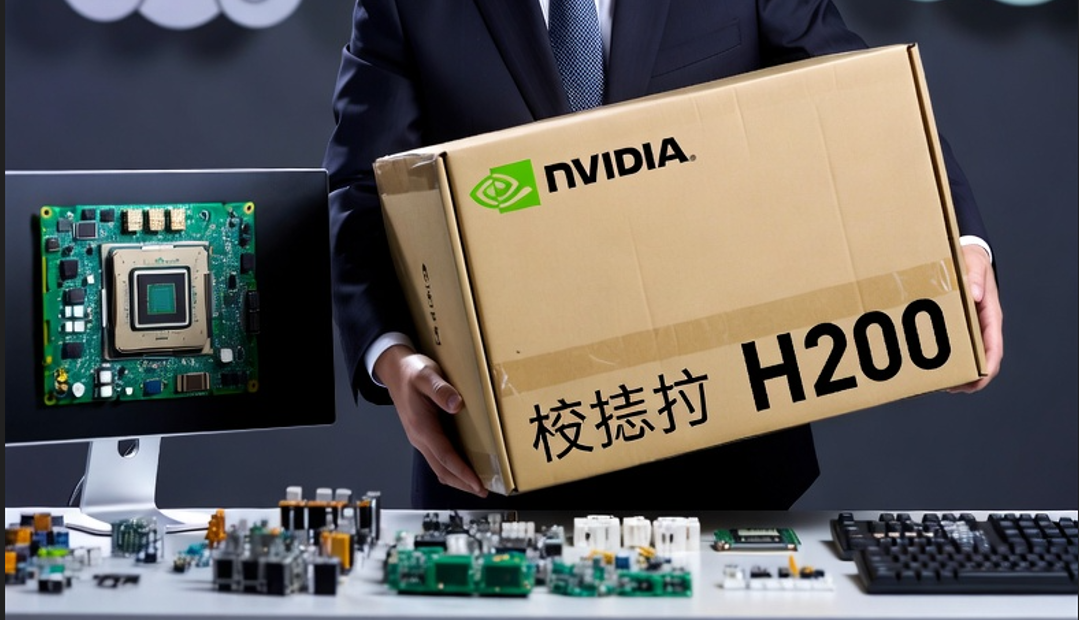
China has approved the import of its first batch of Nvidia’s H200 artificial intelligence chips from the United States, signaling a shift in Beijing’s stance toward advanced U.S. technology as demand for AI computing power surges.
Nvidia, based in California, is the world’s leading supplier of high-performance AI chips used to train and run large-scale artificial intelligence models. The approval allows several hundred thousand H200 chips — Nvidia’s second most powerful AI processor — to be shipped into China, the sources said. They requested anonymity due to the sensitivity of the issue.
The approvals were granted during a visit to China this week by Nvidia Chief Executive Jensen Huang, according to the sources.
The initial batch has been allocated primarily to three major Chinese internet companies, with other firms now joining a queue for subsequent approvals, one of the sources said. The companies receiving the first clearances were not identified.
The move follows a decision earlier this month by U.S. authorities to formally clear exports of the H200 chip to China. Despite that clearance, shipments had been stalled because Chinese authorities had not approved the imports, leaving Beijing as the final gatekeeper.
According to Reuters, Chinese technology companies have placed orders for more than 2 million H200 chips — far exceeding Nvidia’s available supply — underscoring strong demand as firms race to build data centers capable of supporting advanced AI systems.
Why China Had Blocked Advanced Chip Imports
China’s hesitation to allow imports of advanced U.S.-made AI chips has been driven by a combination of geopolitical tensions, national security concerns, and industrial policy objectives.
The H200 has emerged as a flashpoint in U.S.-China relations, as Washington has sought to restrict China’s access to cutting-edge semiconductor technology that could enhance military or strategic capabilities. Although the H200 falls within export rules approved by the United States, Beijing has been cautious about relying too heavily on foreign technology amid escalating trade and technology disputes.
At the same time, Chinese authorities have been working to accelerate the development of domestic semiconductor alternatives. Allowing unrestricted imports of Nvidia’s most powerful chips risks undermining Chinese chipmakers that are still working to close the performance gap with U.S. firms.
Chinese customs authorities earlier told agents that the H200 chips were not permitted to enter the country, Reuters reported this month, reinforcing uncertainty among buyers and suppliers.
Beijing has also discussed tying approval for foreign chip imports to conditions requiring companies to purchase a minimum quota of domestically produced semiconductors, a move aimed at protecting and nurturing China’s local chip industry.
Balancing AI Growth and Self-Sufficiency
The approval of the H200 imports suggests China is prioritizing the immediate needs of its largest internet companies, which are investing billions of dollars to expand computing infrastructure and compete with U.S. rivals such as OpenAI.
Chinese companies, including Huawei, have developed AI chips that rival Nvidia’s H20 — previously the most advanced chip Nvidia was permitted to sell to China — but those products still lag significantly behind the H200 in performance.
The H200 delivers roughly six times the computing power of the H20, making it particularly valuable for training large language models and other resource-intensive AI applications.
It remains unclear how many companies will receive approvals in future batches or what specific criteria Chinese regulators are using to determine eligibility.
Huang arrived in Shanghai last Friday for Nvidia’s annual employee events and has since traveled to Beijing and other cities, Reuters reported. His visit comes as China and the United States continue to navigate a complex relationship marked by competition, cooperation, and caution over advanced technology.
For more news and reports on emerging technologies, including AI, robotics, cybersecurity, blockchain, gaming and the evolving gig economy, visit the home page of The Gignomist.