
Global leaders at the World Economic Forum‘s 2026 annual meeting urged employers to place workers at the heart of artificial intelligence integration, warning that without intentional upskilling and inclusion, societies risk instability amid rapid job transformations.
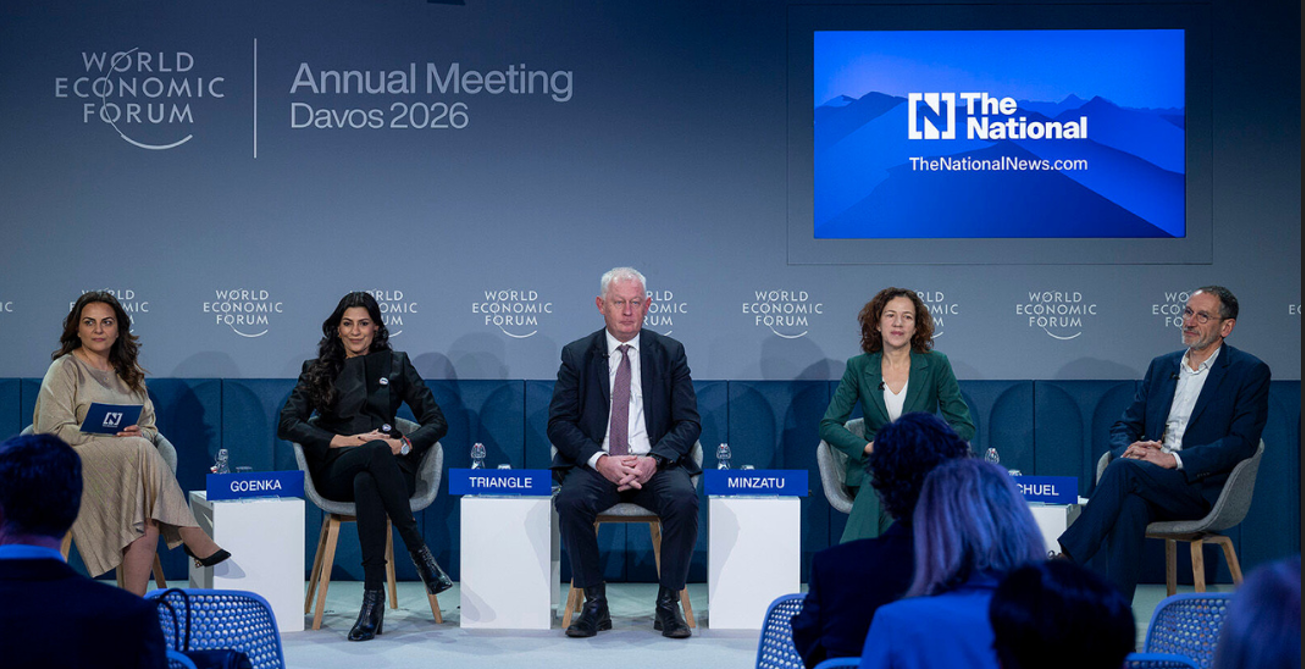
In a panel titled “Workers in the Driver’s Seat,” experts including Denis Machuel, CEO, Adecco Group, Luc Triangle, General Secretary ITUC, Dipali Goenka, CEO and Managing Directo, Welspun Living Ltd, Roxana Mînzatu, Vice-President for Social Rights and Skills, European Commission and Mina Al-Oraibi, Editor-in-Chief, The National, highlighted the seismic shifts reshaping the workforce, with 22% of jobs expected to be structurally affected by 2030, creating millions of new roles while displacing others. Nearly 40% of core skills are set to evolve, driven largely by AI’s exponential growth.
“We are experiencing the most significant workforce transformation in a generation,” said Denis Machuel, CEO of The Adecco Group, a global staffing and workforce solutions firm. He emphasized that the challenge lies not in technology itself but in strategic people management. “Real value will only come through thoughtful workforce organization, skills development and a strong employee engagement,” Machuel added, noting that agility will define success for businesses and individuals alike.
Machuel stressed the need for peaceful societies through social cohesion, arguing that no one is immune to these forces. “If we want peaceful societies, we have to ensure social cohesion,” he said. He advocated for employers to be deliberate about upskilling, pointing out that 83% of workers want to control their own skills development, yet companies often underestimate this appetite.
Luc Triangle, general secretary of the International Trade Union Confederation, echoed the call for worker involvement, insisting on regulation to prevent AI from becoming a threat. “If you don’t regulate AI… workers may feel threatened,” Triangle said. He pushed for workers to participate in AI design processes, adding that the era of lifelong single-job careers is over. “There is a full understanding among workers that they need to pick up skills to be ready for the jobs of tomorrow,” he noted.
From an emerging markets perspective, Dipali Goenka, CEO and managing director of Welspun Living Ltd., an Indian textile giant, highlighted multiskilling as essential for smart factories. She addressed unique challenges like literacy rates, calling for an ecosystem approach that empowers women and builds resilience. “It’s a different situation in emerging markets such as India,” Goenka said, underscoring the need for broad-based empowerment.
Roxana Mînzatu, executive vice-president for social rights and skills, quality jobs and preparedness at the European Commission, pointed to tensions between economic policies and workers’ rights. “How do we stay human-centric as AI is introduced to our production processes?” she asked. Mînzatu described AI as a tool whose impact depends on deployment, urging a “skills revolution” in Europe’s 220-million-worker labor market. “They are all feeling the fear; they need to feel empowered,” she said, advocating annual skills updates akin to routine health checkups and stronger social dialogue.
The discussion, held amid broader WEF talks on technological disruption, underscored a consensus: humans struggle with exponential change, unlike linear progress. Panelists agreed that involving workers in AI’s evolution is key to mitigating uncertainty and fostering trust.
The session was moderated by Mina Al-Oraibi, editor-in-chief of The National, an Abu Dhabi-based news outlet, who guided the conversation toward actionable strategies for employers and policymakers.
As AI becomes embedded in daily work, the panel’s message was clear: success hinges on people-centric strategies that prioritize skills, engagement and adaptability.
For more news and reports on emerging technologies, including AI, robotics, cybersecurity, blockchain, gaming and the evolving gig economy, visit the home page of The Gignomist.