
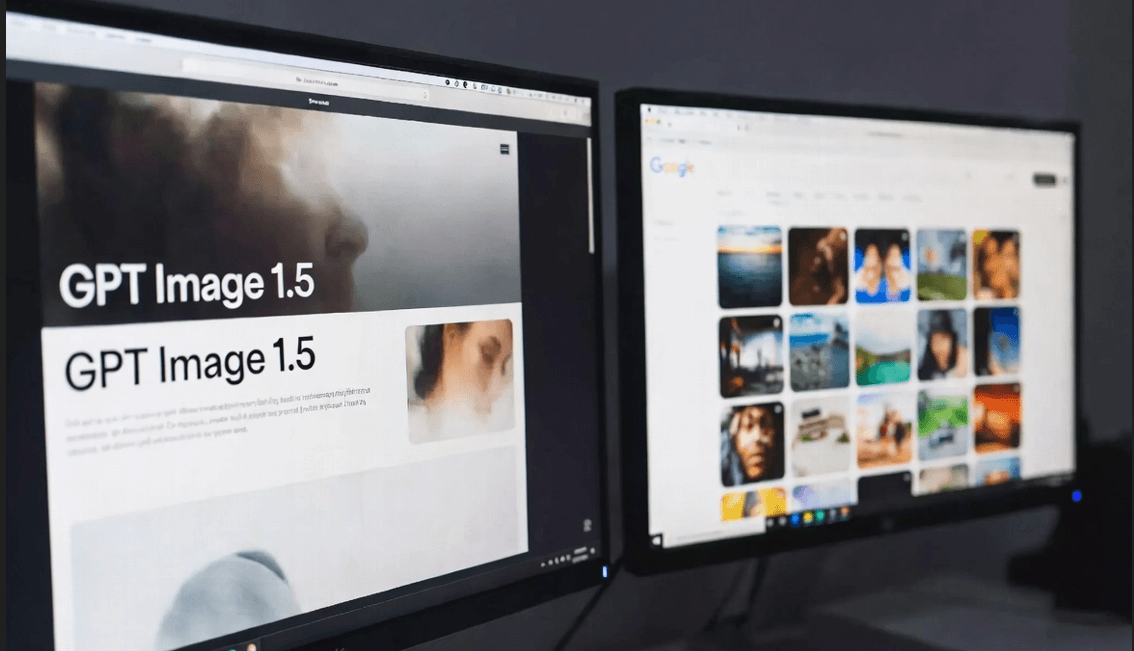
OpenAI has rolled out a major update to its image generation tools, sharpening precision and consistency as enterprises increasingly rely on AI-generated visuals for design and branding.
The update, branded GPT Image 1.5, is available to all ChatGPT users and through OpenAI’s API. The company said the model is powered by GPT-5.2, which early users describe as a significant improvement for business-focused applications.
“Many people’s first experience with ChatGPT involves turning a text prompt into a picture,” Fidji Simo, OpenAI’s CEO of Applications, wrote in a Substack post. “It’s a magical way to see what this technology can do, but the chat interface wasn’t originally designed for this. Creating and editing images is a different kind of task and deserves a space built for visuals.”
One of the most notable improvements is more accurate, targeted image editing, even when images are created directly within ChatGPT rather than through the API. While AI image tools typically allow users to tweak visuals by adjusting prompts, results have often been inconsistent. OpenAI said the updated model better follows user instructions while maintaining consistency in lighting, composition and human features across multiple edits.
Users can now perform a wide range of edits, including adding or removing elements, blending images and rearranging visual components. OpenAI said the model also renders text more clearly, producing readable letters even at smaller sizes or higher density. Improvements were also made to facial rendering in large group images.
“These transformations work for both simple and more intricate concepts, and are easy to try using preset styles and ideas in the new ChatGPT Images feature — no written prompt required,” the company said.
The update intensifies competition with Google, which recently drew strong developer interest with its Nano Banana Pro image model. OpenAI also faces pressure from other rivals in the rapidly evolving image-generation market. Alibaba announced in August that its Qwen-Image model can generate readable text in both Chinese and English, while Black Forest Labs released Flux.2, an open-source image model aimed at advanced visual generation.
As enterprises weigh AI tools for professional design and visualization, OpenAI’s latest update signals a push to strengthen its position against a growing field of competitors.
For more similar news and reports go to the home page of The Gignomist