
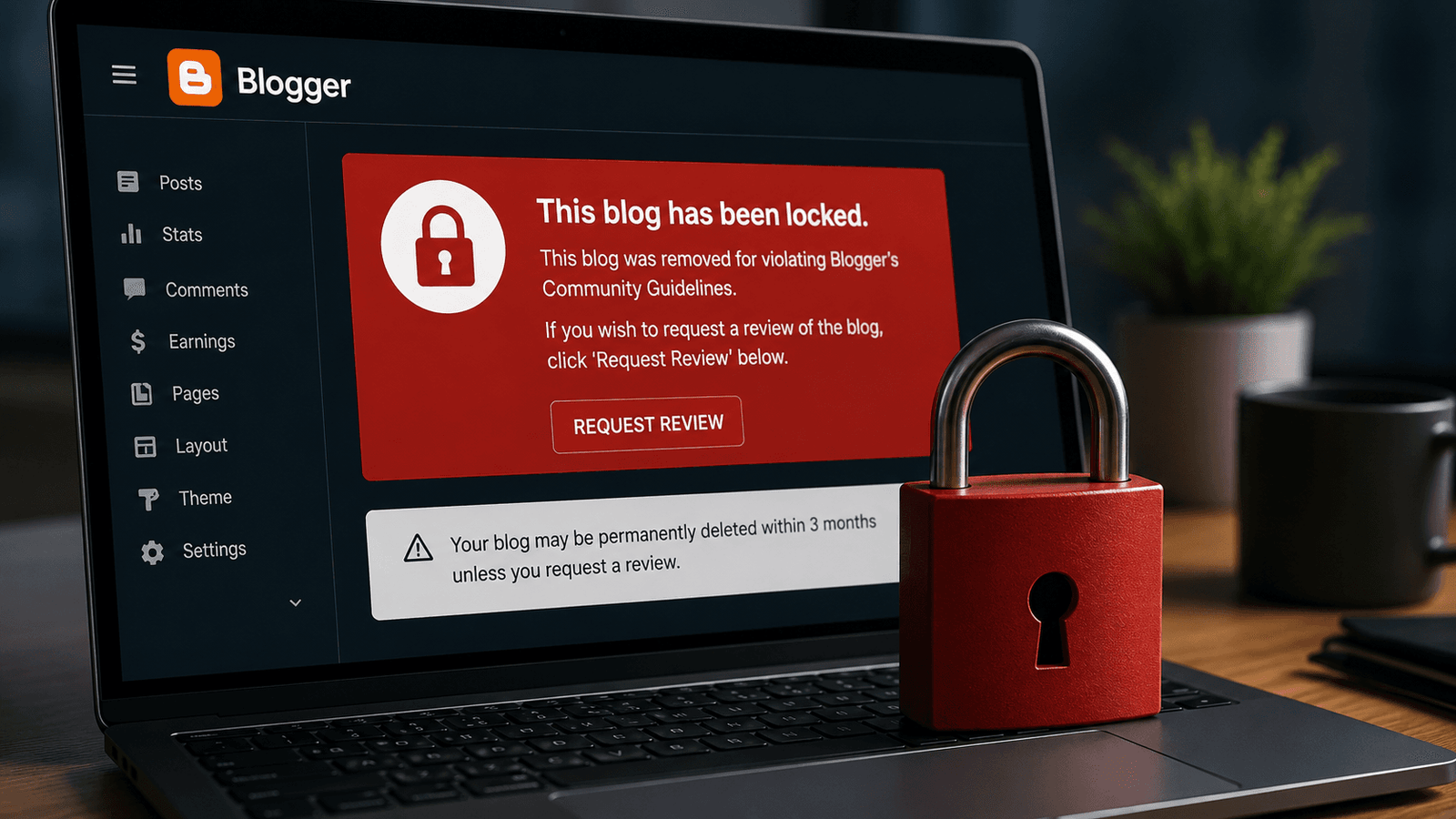
Hundreds of websites hosted on Google’s Blogger platform were unexpectedly locked after an apparent automated malware detection error.The Google Blogger False Positive incorrectly flagged legitimate blogs for violating the platform’s security policies.
The issue emerged on Aug. 4, triggering widespread reports from affected publishers who suddenly lost access to their websites after Blogger identified their content as violating its “Malware and Similar Malicious Content” policy. While some blogs have since been restored through the appeals process, others were reportedly removed from the platform entirely. The Google Blogger False Positive has raised concerns about the reliability of automated content moderation systems.
The incident highlights the growing challenges technology companies face as they increasingly rely on automated detection tools to identify malicious content while minimizing false positives that affect legitimate users.
Automated Detection Appears to Misclassify Legitimate Blogs
Publishers affected by the incident Google Blogger False Positive reported finding a prominent warning in their Blogger dashboards stating that their blogs had been locked for violating community guidelines.
The notification informed users that they could request a review but also warned that blogs could face permanent deletion within three months if no appeal was submitted.The Google Blogger False Positive warning left many publishers uncertain about the future of their websites.
According to reports from affected publishers, the lockout prevented access to essential management tools, including post editing, theme customization, settings, and other administrative features required to operate their websites.
Support discussions quickly gained momentum as hundreds of website owners sought assistance through Google’s official Blogger community forum, suggesting the issue affected a significant number of unrelated websites simultaneously.
One experienced Blogger Product Expert participating in the discussion described the incident as consistent with a large-scale automated misclassification rather than coordinated malicious activity, noting that false positives occasionally occur but rarely at such a scale.
Some Publishers Report Repeated Lockouts
While several users indicated that successful appeals restored access to their blogs, others reported that their websites were locked again shortly afterward. The recurring Google Blogger False Positive issue added to publishers’ frustration.
Some publishers also claimed the Google Blogger False Positive appeared immediately after updating their homepage or making changes to their Blogger template, although no official explanation has confirmed whether those actions directly triggered the automated detection system.
The inconsistent behavior has added uncertainty for website owners attempting to determine whether their blogs remain at risk.
Not every Blogger site appears to have been affected, indicating the incident may involve specific detection rules, templates, or scanning mechanisms rather than the platform as a whole.
Growing Concerns Over Automated Moderation
Modern online platforms increasingly rely on artificial intelligence and automated security systems to identify malware, phishing pages, spam, and other malicious content before it reaches users. The Google Blogger False Positive demonstrates how these systems can sometimes misclassify legitimate content.
These systems allow providers to process millions of websites and files at a scale that would be impossible through manual review alone.However, the Google Blogger False Positive shows that automation still requires human oversight.
However, automated moderation systems occasionally produce false positives, mistakenly identifying legitimate content as malicious. Such errors can interrupt businesses, remove valuable information, and reduce trust among website owners who depend on digital publishing platforms.
For independent bloggers, educators, nonprofits, and small businesses using Blogger, losing administrative access can disrupt publishing schedules, search visibility, advertising revenue, and audience engagement.
Appeals Become Critical Recovery Path
Google’s review process has become the primary recovery mechanism for affected publishers.The Google Blogger False Positive.
Users who received the warning were instructed to submit review requests so Google’s moderation teams could re-evaluate the automated decision.The Google Blogger False Positive has made the appeals process essential for restoring access.
Reports from the Blogger community indicate that some successful appeals resulted in blogs returning online, suggesting the review process is correcting at least some of the erroneous classifications.
Nevertheless, publishers remain concerned about potential delays and the possibility of repeated lockouts before a permanent resolution is implemented.
Balancing Security and Accuracy
Technology companies face increasing pressure to identify malware quickly without disrupting legitimate users.The Google Blogger False Positive illustrates the challenge of balancing security with accuracy.
Security systems must detect compromised websites rapidly to protect visitors from malicious software, phishing campaigns, and fraudulent activity. At the same time, he Google Blogger False Positive demonstrates how overly aggressive detection rules can mistakenly affect legitimate publishers.
The Blogger incident illustrates the trade-off between rapid automated enforcement and accuracy. While automated systems remain essential for protecting large online platforms, maintaining effective review procedures and transparent communication is equally important when false positives occur.
Experts generally recommend that website owners maintain regular backups of content and configuration settings regardless of the publishing platform they use. Independent backups can significantly reduce downtime if websites become temporarily inaccessible due to platform issues or moderation errors.
Google Expected to Continue Reviewing Reports
As affected publishers continue submitting appeals, attention is likely to remain focused on how quickly access can be restored and whether Google adjusts the automated detection mechanisms behind the Google Blogger False Positive.
Several blogs have already returned online following review requests, indicating that the platform is actively processing appeals. However, the overall number of affected websites and the underlying cause of the misclassification have not yet been publicly confirmed.
For now, publishers using Blogger are encouraged to monitor their dashboards, respond promptly to policy notifications, and submit review requests immediately if they are affected by the Google Blogger False Positive
The incident serves as another reminder that while automated security systems are essential for protecting online platforms, human oversight and effective appeal mechanisms remain equally critical for maintaining trust across the digital publishing ecosystem.
Like The Gignomist’s coverage? Subscribe to our free newsletter for the latest technology news, AI breakthroughs, startup updates, cybersecurity insights, blockchain developments, gaming trends, and expert analysis from across the global innovation ecosystem.