

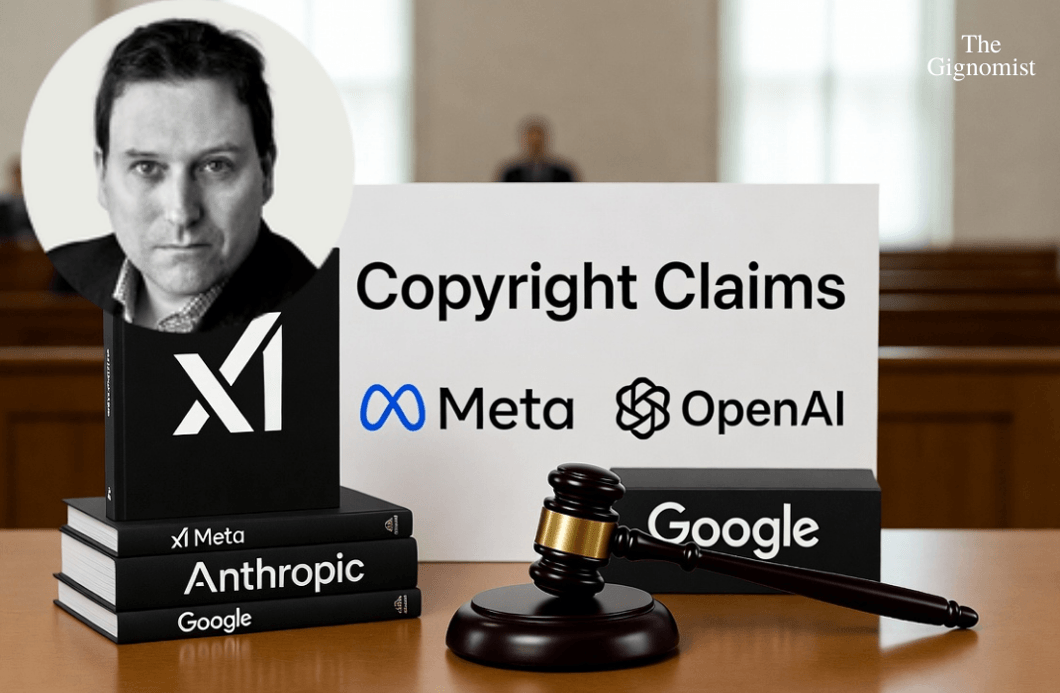
New York Times investigative reporter John Carreyrou, best known for exposing fraud at Silicon Valley blood-testing startup Theranos, has filed a copyright infringement lawsuit in California federal court alongside five other writers against Elon Musk’s xAI, Anthropic, Google, OpenAI, Meta Platforms and Perplexity.
According to a Reuters report, Carreyrou, who is also the author of “Bad Blood,” alleges the artificial intelligence companies used copyrighted books without permission to train their chatbot systems.
The plaintiffs allege the companies illegally copied their books and used them to train large language models that power popular AI chatbots. The lawsuit adds to a growing wave of copyright cases brought by authors, artists and publishers challenging how technology companies source training data for artificial intelligence systems.
The case marks the first time xAI has been named as a defendant in an AI copyright lawsuit.
A spokesperson for Perplexity said the company does not index books. Representatives for the other defendants did not immediately respond to requests for comment.
Unlike several similar lawsuits, the authors in this case are not seeking class-action status. Instead, they argue that class actions favor defendants by allowing them to resolve large numbers of claims through a single settlement.
“LLM companies should not be able to so easily extinguish thousands upon thousands of high-value claims at bargain-basement rates,” the complaint states.
The filing follows a major settlement reached in August, when Anthropic agreed to pay $1.5 billion to resolve a class-action lawsuit brought by authors who claimed the company pirated millions of books. The new complaint argues that authors in that case will receive only a small share of potential statutory damages, estimated at about 2% of the Copyright Act’s maximum of $150,000 per infringed work.
The lawsuit was filed by attorneys at Freedman Normand Friedland, including Kyle Roche, whom Carreyrou profiled in a 2023 New York Times article. During a November hearing in the Anthropic case, U.S. District Judge William Alsup criticized a separate law firm co-founded by Roche for encouraging authors to opt out of the settlement in pursuit of higher payouts. Roche declined to comment Monday.
At a later hearing, John Carreyrou told the court that using copyrighted books to build AI systems amounted to Anthropic’s “original sin,” arguing that the settlement failed to adequately address the scale of the alleged infringement.
The case comes as technology companies face increasing legal scrutiny over how artificial intelligence systems are trained, with courts expected to play a key role in defining the boundaries of copyright law in the AI era.
For more news and reports on emerging technologies, including AI, robotics, cybersecurity, blockchain, gaming and the evolving gig economy, visit the home page of The Gignomist.