

The Marketing Club’s partnership with Sydney recruitment specialist The Onset Group started attracting attention through networking events and end-of-year gatherings, but the more consequential development has been what happened after the parties ended. TMC has expanded into a marketing community of more than 18,000 people across Australia and New Zealand, while The Onset has remained part of its Sydney ecosystem through events focused increasingly on careers, professional development and the changing skills marketers need.
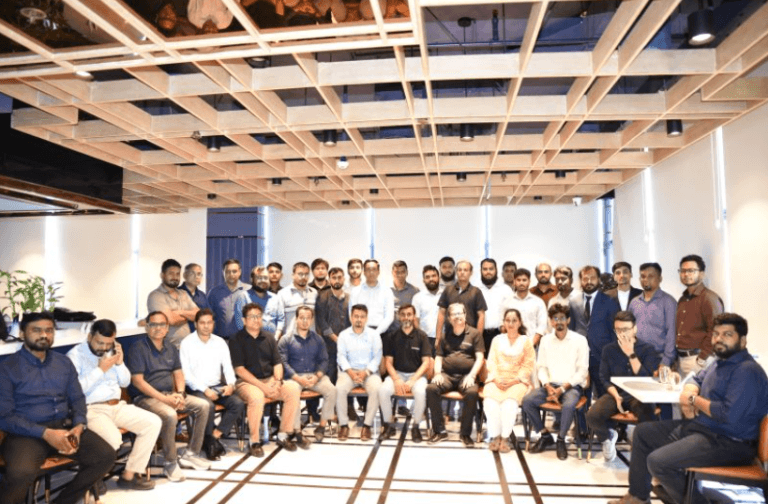
That evolution gives more context to TMC and The Onset’s 2025 Sydney Christmas event. What could have been viewed as another industry party was part of a wider attempt to create an accessible professional network for marketers who might otherwise depend on employers, conferences or personal contacts to build industry relationships.
By 2026, the model has broadened substantially. TMC combines networking with educational panels, workshops, online community access, job opportunities and city-based events, while its Sydney programming has addressed subjects ranging from artificial intelligence and marketing careers to consumer insights and the future of the profession.
The Marketing Club Grew From an Online Community
The Marketing Club was created by marketer Chanel Clark after her own experience with professional isolation and burnout highlighted a problem that is familiar to many people working in small marketing teams. Marketing departments can be surprisingly fragmented.
Large agencies and corporations may provide colleagues, mentors and structured professional development, but marketers working as solo hires or in small teams can have far fewer opportunities to compare ideas with peers. Specialists in content, performance marketing, brand, social media, CRM and other disciplines can also spend much of their working lives inside separate professional circles.
TMC was designed to reduce that isolation by creating a community in which marketers could share knowledge and build relationships outside their employers.
The organization began as an online Slack community before expanding into physical events and a broader Australia-New Zealand network. That origin helps explain why networking remains central to its events even as the educational component has expanded.
Australia Became a Major Part of the Community
TMC’s Australian expansion accelerated during 2025.
The organization introduced a fuller event program across Sydney, Melbourne and Brisbane as its community grew on both sides of the Tasman. Sydney became an important part of that strategy, with social gatherings followed by educational events, panels and other industry sessions.
The Marketing Club’s current community information says it now reaches more than 18,000 marketers across Australia and New Zealand. That scale changes the significance of its local events.
A networking night involving dozens of marketers may appear small compared with a major industry conference, but recurring local events can serve a different function. They allow people to build relationships repeatedly rather than exchanging contact details during a single annual convention.
For professionals early in their careers or working without a large internal marketing team, that repeated contact can be particularly valuable.
The Onset Partnership Added a Career Dimension
The Onset’s involvement also fits naturally with that model.
The Sydney-based specialist recruitment company works across areas including technology, digital and professional roles. For a marketing community whose members are interested in career development, employment trends and professional networks, a recruitment partner brings a different perspective from a conventional event sponsor. The relationship continued beyond the original Christmas event.
TMC has subsequently held Sydney sessions at The Onset’s Surry Hills location, including networking events and career-focused discussions. The Onset is also listed among TMC’s Sydney partners for 2026.
That continuity matters because it turns the relationship from a one-off venue or sponsorship arrangement into part of a broader community infrastructure.
Recruiters gain direct exposure to professionals and changing skills in the market, while marketers gain access to people who see hiring requirements across multiple employers. The potential value therefore extends beyond collecting résumés or promoting job vacancies.
TMC’s Events Have Shifted Toward Career Skills
One of the clearest signs of the community’s evolution is the subject matter of its newer events.
A Sydney Careers in Marketing event hosted at The Onset examined the reality that marketing careers are rarely linear. Speakers discussed professional setbacks, career changes, commercial value, mental health and the skills marketers need as the industry changes. Artificial intelligence was a recurring theme.
One takeaway highlighted by TMC was that marketers increasingly need to understand how to use AI while also demonstrating critical judgment about where and why it should be applied. Another was that narrow specialist roles may become harder to sustain as employers expect marketers to operate across a wider range of functions. Those themes are considerably more substantive than traditional networking.
Marketing teams are currently absorbing changes in generative AI, automation, search, customer data, content production and measurement. Professionals therefore need both technical familiarity and the ability to demonstrate how marketing contributes to business results.
Community events can provide a place for practitioners to compare how those changes are affecting actual roles rather than relying entirely on vendor presentations or online predictions.
AI Is Changing What Employers Expect From Marketers
The rise of generative AI makes this professional-development function particularly relevant.
Marketers now have access to tools that can generate copy, images, research summaries, campaign ideas and customer communications in seconds. Automation platforms can also perform tasks that previously required substantial manual work. That does not eliminate the need for marketing professionals, but it can change which skills employers value.
Producing a basic piece of content becomes less differentiated when almost anyone can generate a first draft. Knowing which audience to target, which message fits the brand, whether an AI-generated claim is accurate and how activity contributes to revenue becomes more valuable. The same applies to analytics.
AI can summarize data quickly, but marketers still need to determine whether a metric is meaningful, whether an experiment is well designed and whether an apparent correlation justifies changing strategy.
That combination of AI literacy and critical thinking is increasingly becoming part of career development rather than a separate technology topic.
Networking Still Solves a Real Career Problem
It is easy to dismiss industry networking as a collection of drinks, name badges and LinkedIn connections. Done badly, that description can be accurate. But professional networks serve an economic function.
Many job opportunities are discovered through personal connections before or alongside formal recruitment. Freelancers and agencies often win work through referrals. Marketers moving between industries can learn which skills transfer by speaking with people already working in those sectors.
Networks can also expose professionals to information that is difficult to obtain from job advertisements.
A vacancy describes what an employer says it wants. Conversations with hiring managers, recruiters and working marketers can reveal which capabilities organizations are actually struggling to find.
For younger marketers, that information can influence which skills they choose to develop. For experienced professionals, it can help identify how roles and expectations are changing.
TMC’s combination of digital community and physical events gives members opportunities to build those connections repeatedly rather than relying on occasional large conferences.
The Community Has Expanded Beyond Social Events
The Christmas-event framing therefore captures only a small part of what TMC has become.
The organization now combines in-person events with a Slack community, newsletters, professional resources, job listings and educational programming. Its event model includes expert panels, networking sessions and workshops rather than relying solely on social gatherings.
The organization describes itself as a community built “by marketers, for marketers,” with participation spanning different career stages and specialties. Its partner network has expanded alongside that growth.
For Sydney’s 2026 program, TMC lists partners spanning recruitment, outdoor advertising, automation, digital asset management, social-media technology, CRM, market research and event technology. The Onset remains among them. That range reflects how broad modern marketing has become.
A marketer may now need to understand creative work, data, AI, automation, customer experience, media, CRM and commercial strategy while coordinating with specialists across each area.
No single networking event can teach all of those skills, but a professional community can make it easier to find people who possess them.
Community Can Become More Valuable as Marketing Fragments
Paradoxically, the more digital marketing becomes, the greater the potential value of professional communities.
Teams increasingly work remotely or across hybrid environments. Specialists collaborate through software rather than sitting in the same office. Independent consultants and freelancers may have no permanent professional peer group at all. At the same time, marketing itself is fragmenting into more specialties.
Search marketing is changing as AI-generated answers alter how people discover information. Social platforms continuously change their algorithms and advertising products. Privacy rules affect customer data, while generative AI is changing content production and creative workflows. Keeping up with all of those developments individually is difficult.
Peer networks create an informal knowledge-distribution system. One marketer experiments with a new platform, another encounters a measurement problem and another sees how a particular hiring trend is developing across several companies. Sharing those experiences can help practitioners distinguish genuine industry change from hype.
TMC’s Growth Also Creates a Different Challenge
Growth creates its own risks for a community built around personal connection.
A small professional group can feel intimate because members repeatedly encounter the same people. An 18,000-member network cannot operate in exactly the same way.
As membership expands, TMC has to preserve the accessibility that helped drive its early growth while developing enough structure to serve a much larger audience. Events are one way to do that.
City-based gatherings divide a large regional community into smaller local networks. Educational programming gives members a reason to attend beyond socializing, while online channels maintain contact between physical events.
Commercial partnerships can provide venues, speakers and financial support, but they also need to remain aligned with what members find useful. If events become dominated by sales pitches, the community value that attracted participants can weaken.
That balance between scale, commercial support and genuine professional utility will become increasingly important as TMC grows.
The Christmas Bash Was a Starting Point, Not the Story
The original Sydney Christmas event represented the social side of The Marketing Club’s expansion: marketers meeting outside the office, building connections and ending the year as a professional community.
What followed makes the story more durable.
TMC continued expanding across Australia and New Zealand, grew beyond 18,000 marketers and developed a wider program around skills, careers and industry change. The Onset relationship also continued, with the recruitment company hosting Sydney activities and remaining part of TMC’s local partner network.
That evolution matters because marketing careers themselves are becoming less predictable.
Artificial intelligence is changing workflows. Employers are reconsidering the balance between specialists and generalists. Marketers are under increasing pressure to demonstrate commercial impact while keeping up with rapidly changing technology.
In that environment, professional communities can offer something that another software tool cannot easily reproduce: access to other people confronting the same changes. The lasting significance of TMC’s Sydney events is therefore not the size of a Christmas party.
It is whether the network built around those gatherings can continue helping marketers learn, find opportunities and adapt as the profession itself changes.