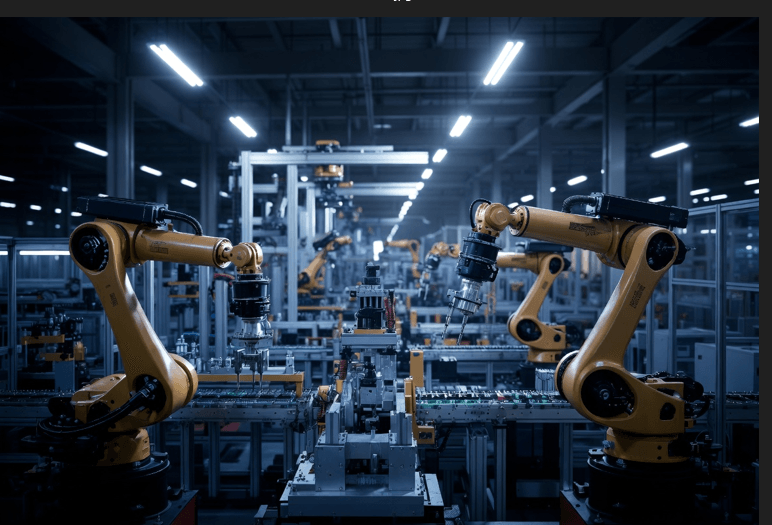
China is aggressively integrating artificial intelligence and robotics into its manufacturing backbone, using AI-powered dark factory, and “factory brains” to coordinate assembly lines and logistics. Massive government and private investments are driving the country’s industrial upgrade, helping it maintain a competitive edge even as labor costs rise and trade tensions simmer.
Companies such as Midea and Baosteel are leading the push: assembly plants now use virtual agents to coordinate thousands of robotic tasks, while AI systems manage container scheduling at ports like Tianjin — reducing human labor by as much as 60%. Advanced AI models developed by firms like Huawei are central to these efforts, optimizing everything from energy use in cement production to predictive maintenance.
According to The Wall Street Journal, China installed nearly 295,000 industrial robots last year, far outpacing other major economies, and now operates over 2 million robots nationwide — the largest such stock in the world. Global institutions have recognized around 45 Chinese sites for advanced AI-driven productivity enhancements.
While experts warn of job losses and financial risks, Chinese officials argue that demographic decline and economic pressures leave no alternative. For them, the AI-led automation wave is not only a technological revolution — it is a national necessity.
AI-Powered “Factory Brains” Coordinate Robotic Fleets
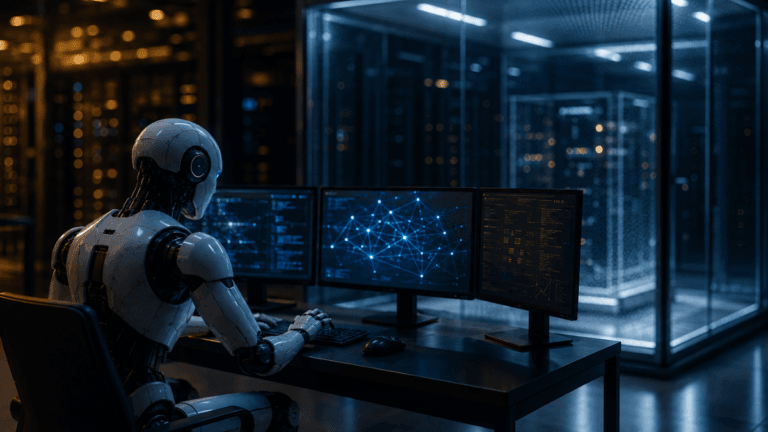
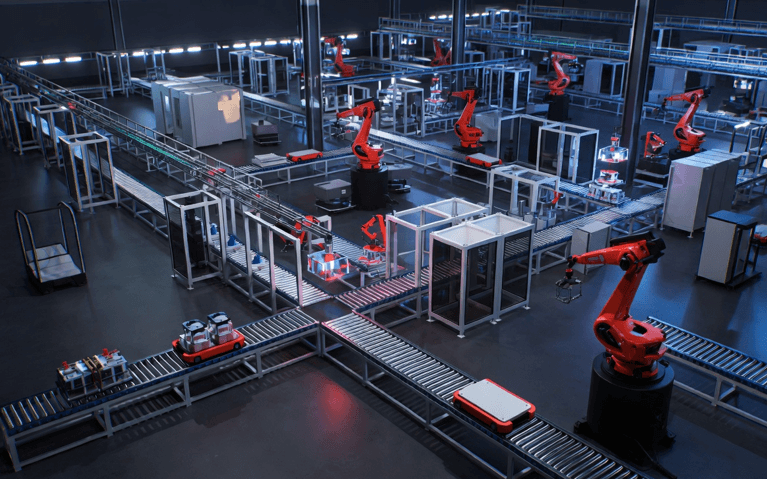
China is rolling out AI-driven systems dubbed “factory brains” in major industrial hubs — including a Midea appliance plant in Jingzhou — to orchestrate thousands of robotic tasks. These advanced brains operate virtual agents that communicate and optimize workflows, making production highly efficient with minimal human intervention.
Massive Robot Installations, Global Dominance
In 2024, China installed about 295,000 industrial robots, outpacing every other country by a wide margin. Its total stock of operational robots now exceeds 2 million units, marking the largest in the world. This surge cements the country’s role as the leader in global automation.
Efficiency Gains at Ports and Heavy Industry
AI systems at ports such as Tianjin now handle massive logistics operations — coordinating container flows and scheduling with little human oversight. In steel plants like Baosteel’s “dark factory,” robots operate continuously; AI reduced the need for human checks from once every three minutes to once every 30 minutes.
Domestic Innovation and Strategic Backing
Homegrown tech giants like Huawei are developing customized AI models tailored for industrial use, while local funding supports the development of intelligent robotics. Chinese manufacturers are not just deploying robots — they are also producing them, boosting self-reliance and local market share.
Addressing Economic Headwinds with Automation
Facing a declining workforce and rising labor costs, China is turning to automation as a core strategy for maintaining industrial strength. Officials say the country cannot maintain its competitive edge without heavily investing in AI and robotics — a transition they describe as vital to its future economic power.
Risks Ahead: Jobs and Social Disruption
Experts warn that widespread automation may lead to significant job losses, especially in roles reliant on routine labor. As robots take over repetitive tasks, there are growing concerns about worker displacement and the need to retrain or absorb displaced labor into more skilled roles.