
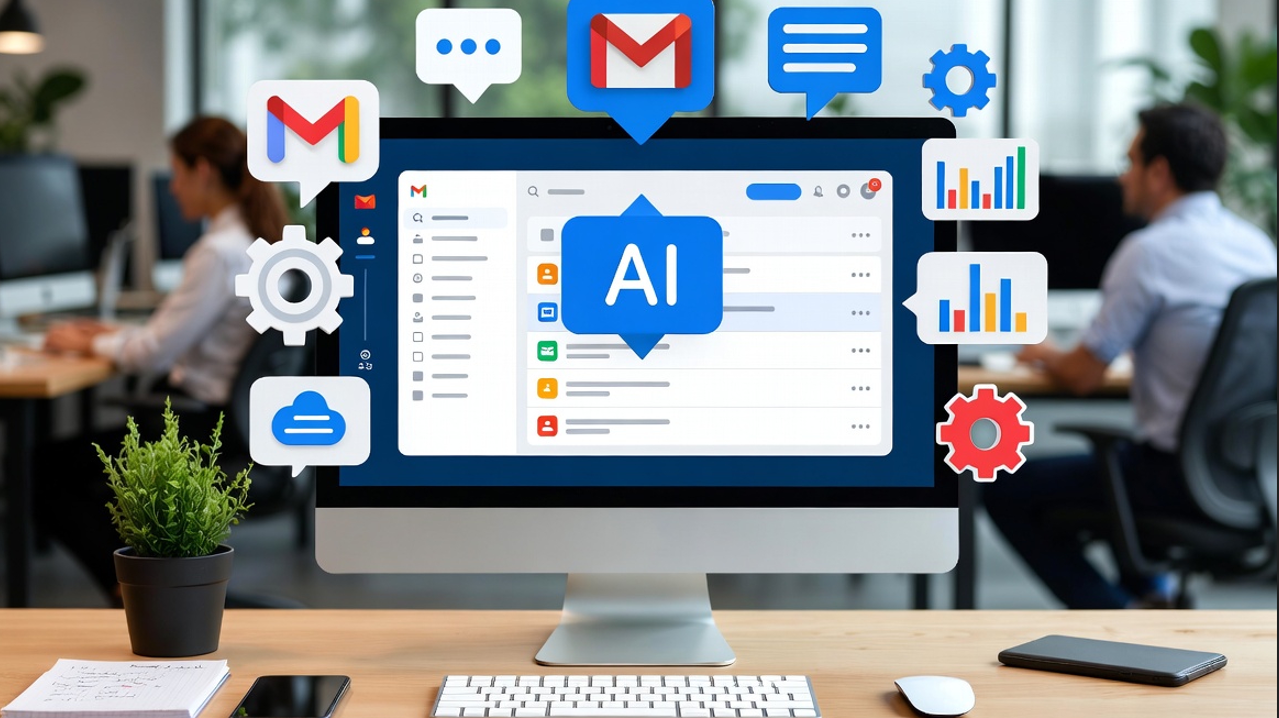
More artificial intelligence is being embedded into Gmail as Google seeks to evolve the world’s most widely used email service into a versatile personal assistant capable of refining writing, condensing scattered inbox information and generating daily task lists.
The enhancements, unveiled Thursday, could mark a significant shift for Gmail, which revolutionized email communication upon its launch nearly 22 years ago. Today, the platform boasts over 3 billion users, rivaling the ubiquity of Google’s search engine.
Initially limited to English-language users in the United States, Google plans to extend these AI capabilities to additional countries and languages throughout the year.
Personalized Writing Assistance Rolls Out Widely
The most accessible new tool, dubbed “Help Me Write,” is engineered to adapt to a user’s unique writing style. It personalizes email drafts and provides real-time recommendations to polish messages, making composition more efficient and tailored.
This feature aims to streamline everyday communication, from professional correspondence to personal notes, by suggesting improvements that align with individual preferences.
Advanced Search and Summarization for Premium Users
Subscribers to Google’s Pro and Ultra tiers gain access to AI technology akin to the AI Overviews introduced in its search engine in 2023. This allows users to input conversational queries directly into Gmail’s search bar, receiving immediate responses drawn from their inbox contents.
For instance, users could ask for summaries of travel plans or financial updates buried in emails, bypassing the need to manually sift through archives.
Experimental ‘AI Inbox’ Targets Productivity
In a potentially groundbreaking development, Google is testing “AI Inbox” with a select group of U.S. users. When activated, this function scans inboxes to propose daily to-do lists and highlight topics warranting attention.
“This is us delivering on Gmail proactively having your back,” said Blake Barnes, Google’s vice president of product.
All these innovations are powered by Google’s latest AI model, Gemini 3, which debuted in its search engine late last year. The model’s positive reception has intensified competition, prompting responses from rivals like OpenAI’s ChatGPT.
Potential Risks and Privacy Safeguards
Despite the promise, integrating deeper AI into Gmail carries risks. Malfunctions could lead to inaccurate information or problematic email drafts, though users retain the ability to review and disable features.
Privacy concerns echo Gmail’s early days, when targeted ads based on email content sparked backlash. Google has since assured that AI-analyzed data will not train its models and has implemented “engineering privacy” measures to isolate inbox information from unauthorized access.
The company, based in Mountain View, California, emphasizes that these safeguards protect user data while enhancing functionality.
As AI continues to permeate daily tools, Gmail’s updates reflect broader industry trends toward intelligent, proactive assistance. Rivals have adopted similar approaches, but Google’s scale positions it to influence how billions manage their digital lives.
For more news and reports on emerging technologies, including AI, robotics, cybersecurity, blockchain, gaming and the evolving gig economy, visit the home page of The Gignomist.