
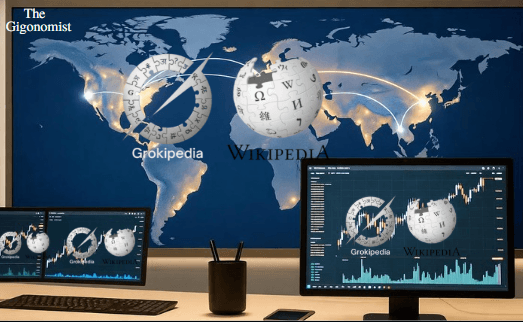
Elon Musk has unveiled Grokipedia, a new crowdsourced online encyclopedia designed to challenge Wikipedia and reshape how information is created and verified online.
Announcing the launch on X (formerly Twitter), Musk said Grokipedia.com is “now live,” adding that its mission is to deliver “the truth, the whole truth, and nothing but the truth.” The billionaire entrepreneur has long criticized Wikipedia for what he calls “left-leaning propaganda” and previously urged users to stop donating to the nonprofit Wikimedia Foundation.
According to the site, Grokipedia currently hosts 885,000 articles, compared to Wikipedia’s more than 7 million English entries. The platform features a minimalist design centered on a search bar and allows users to browse topics from Taylor Swift to the Chola Dynasty.
AI-Powered Encyclopedia Built by Musk’s xAI
While Wikipedia relies on a network of volunteer editors, Grokipedia appears to draw heavily on Musk’s xAI technology, which powers his chatbot Grok. Reports suggest Grokipedia’s articles are generated or fact-checked by Grok’s AI model, with some entries adapted from existing Wikipedia pages.
The Wikimedia Foundation, which operates Wikipedia, said Tuesday that it is “still in the process of understanding how Grokipedia works.” In a statement, the foundation emphasized that Wikipedia’s transparency and volunteer-driven oversight remain its strengths.
“Unlike newer projects, Wikipedia’s strengths are clear: it has transparent policies, rigorous volunteer oversight, and a strong culture of continuous improvement,” the foundation said.
Concerns Over Bias and Transparency
Grokipedia’s entry about Wikipedia accuses the site of harboring “systemic ideological biases,” particularly in coverage of political figures. However, critics say Grokipedia itself faces questions about bias, sourcing, and transparency, noting that some of its articles contain limited citations compared to Wikipedia’s well-documented references.
The launch also reignites broader debates over AI-generated content and the future of human knowledge creation. As AI systems increasingly shape what people read and believe, Musk’s move signals an escalating contest over who defines truth in the digital age.