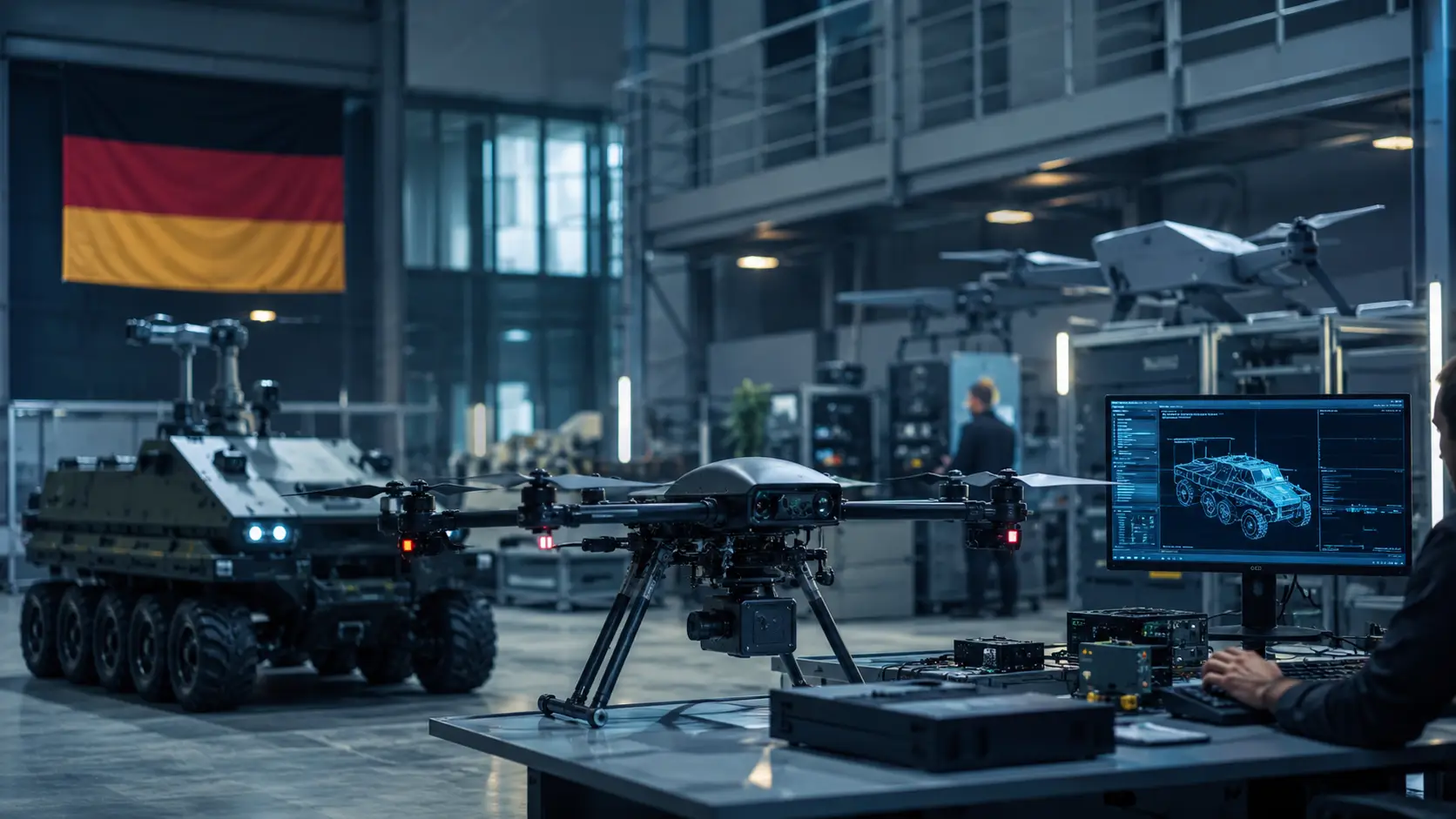
Germany is preparing to become a direct investor in domestic defense startups as part of a sweeping strategy aimed at strengthening the country’s innovation ecosystem while accelerating military modernization.
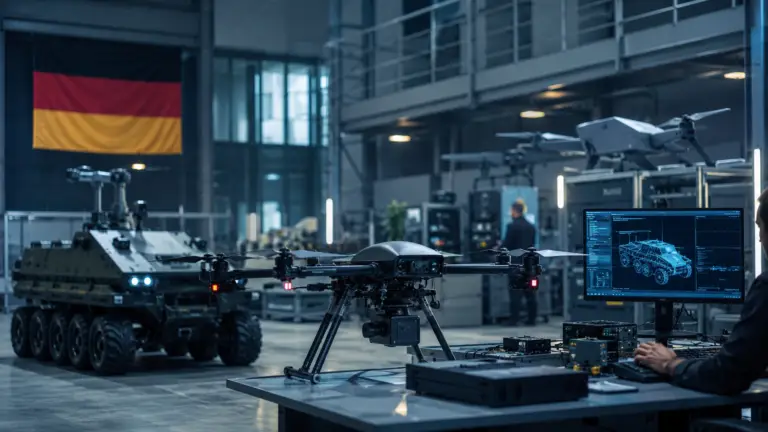
The new initiative introduces a federal investment vehicle that will allow the German government to acquire equity stakes in startups and scale-ups developing technologies including defense drones with clear defense or security applications. The move reflects a broader policy shift as Europe seeks to expand defense capabilities, strengthen technological sovereignty, and reduce dependence on external suppliers amid an increasingly uncertain geopolitical environment.
The strategy arrives as governments across Europe continue increasing defense spending following Russia’s invasion of Ukraine and renewed concerns over long-term transatlantic security commitments. German policymakers increasingly view emerging technology companies as critical contributors to future military readiness, particularly in areas such as artificial intelligence, autonomous systems, robotics, cybersecurity, drones, and advanced software.
Defense Technology Moves to the Center of Startup Policy
Unlike traditional industrial subsidies, Germany’s approach seeks to position the government as a long-term investment partner capable of supporting promising companies through growth stages that often require substantial capital.
The planned investment vehicle will target startups building technologies with military applications while complementing broader efforts to improve financing conditions for innovative businesses. Officials have not yet disclosed the size of the proposed fund, but the initiative forms part of a wider startup strategy that includes measures to simplify regulations, improve access to skilled talent, and encourage private investment.
The strategy also extends Germany’s Future Fund beyond 2030, signaling continued government support for venture-backed innovation across technology sectors including biotechnology and deep tech.
Ukraine War Reshapes Defense Innovation
The battlefield in Ukraine has become an important proving ground for modern defense technologies, demonstrating how startups can rapidly develop and deploy capabilities that once required years of procurement through traditional defense contractors.
German companies developing AI-powered defense systems, autonomous vehicles, and drone technologies have emerged among Europe’s fastest-growing defense innovators. Their success has strengthened arguments that governments should support younger technology companies capable of delivering new capabilities more quickly than legacy suppliers.
The shift also reflects a broader transformation within European defense procurement, where software-defined systems, artificial intelligence, and autonomous platforms are becoming increasingly important alongside conventional military equipment.
Closing Germany’s Scale-Up Funding Gap
While Germany continues to produce a growing number of technology startups, policymakers acknowledge that many companies struggle to secure sufficient growth capital compared with competitors in the United States and the United Kingdom.
Industry data shows venture capital investment in Germany remains significantly below larger international markets despite record startup formation during the first half of 2026. Many successful German startups have historically looked overseas for larger financing rounds, prompting concerns that valuable intellectual property and future industrial champions could ultimately relocate abroad.
By providing direct government investment alongside private capital, Berlin hopes to strengthen domestic financing options while encouraging institutional investors to participate in larger funding rounds.
A New Industrial Strategy for Europe
Germany’s latest initiative illustrates how defense policy is becoming closely linked with industrial competitiveness and technological leadership.
Rather than treating defense spending solely as a security expense, European governments increasingly view military innovation as a catalyst for economic growth, advanced manufacturing, artificial intelligence research, and high-skilled employment.
This approach mirrors broader efforts across Europe to strengthen domestic production capabilities while building resilient supply chains for strategically important technologies. It also reflects growing recognition that future military competitiveness will depend heavily on software, autonomous systems, secure communications, data analytics, and AI-enabled decision-making.
The government believes stronger collaboration between public institutions, private investors, and technology entrepreneurs can accelerate commercialization while helping innovative companies remain headquartered in Germany.
What It Means for Europe’s Technology Landscape
Germany’s decision could have implications well beyond its borders.
If successful, direct state investment may encourage other European governments to adopt similar models for supporting defense innovation, particularly as NATO members continue increasing military expenditures and investing in next-generation capabilities.
For venture capital firms, the policy could reduce financing risks for early-stage defense companies while attracting additional institutional capital into a sector that has historically faced funding challenges.
For startups, government participation may provide greater confidence to pursue ambitious research programs requiring substantial long-term investment.
As defense and commercial technologies continue to converge, artificial intelligence, robotics, cybersecurity, and autonomous systems are expected to remain among Europe’s fastest-growing innovation sectors. Germany’s latest strategy positions the country to play a more active role in financing that transition while strengthening both its national security and technology economy
For more news and reports on emerging technologies, including AI, robotics, cybersecurity, blockchain, gaming and the evolving gig economy, visit the home page of The Gignomist.